Saudi Arabia’s Red Sea: A new luxury coast taking shape
Why leading hotel brands are quietly betting on this stretch of coastline
Until recently, Saudi Arabia wasn’t part of the conversation around luxury beach travel. Despite having a long Red Sea coastline, the area stayed largely off-limits to international tourism, known mostly to divers and nearby communities. That’s now changing, and quickly.
The shift is being driven by the Red Sea Project, a large-scale but carefully controlled development that’s drawing some of the world’s top hotel brands. Unlike the highly built-up resort hubs elsewhere in the Gulf, this coast still feels raw: clear water, healthy coral reefs, and wide, undeveloped landscapes. The appeal for luxury brands is obvious—space to build thoughtfully, and a setting that doesn’t feel manufactured. What’s emerging isn’t a single resort strip, but a collection of very different properties, each interpreting luxury in its own way.
High-end hotels where you can step into a futuristic setting, no AI, just real, fully built properties.
Shebara Resort
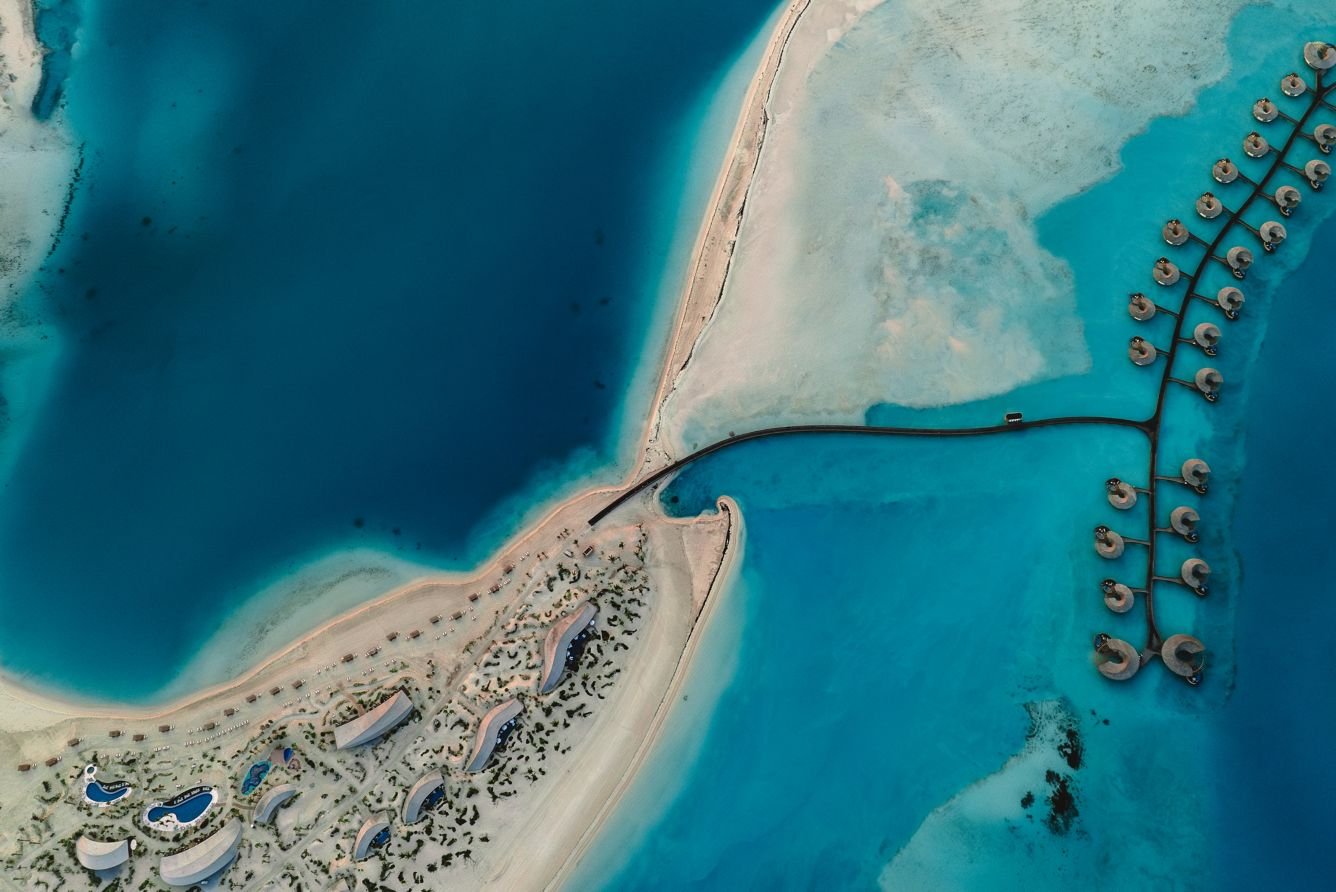
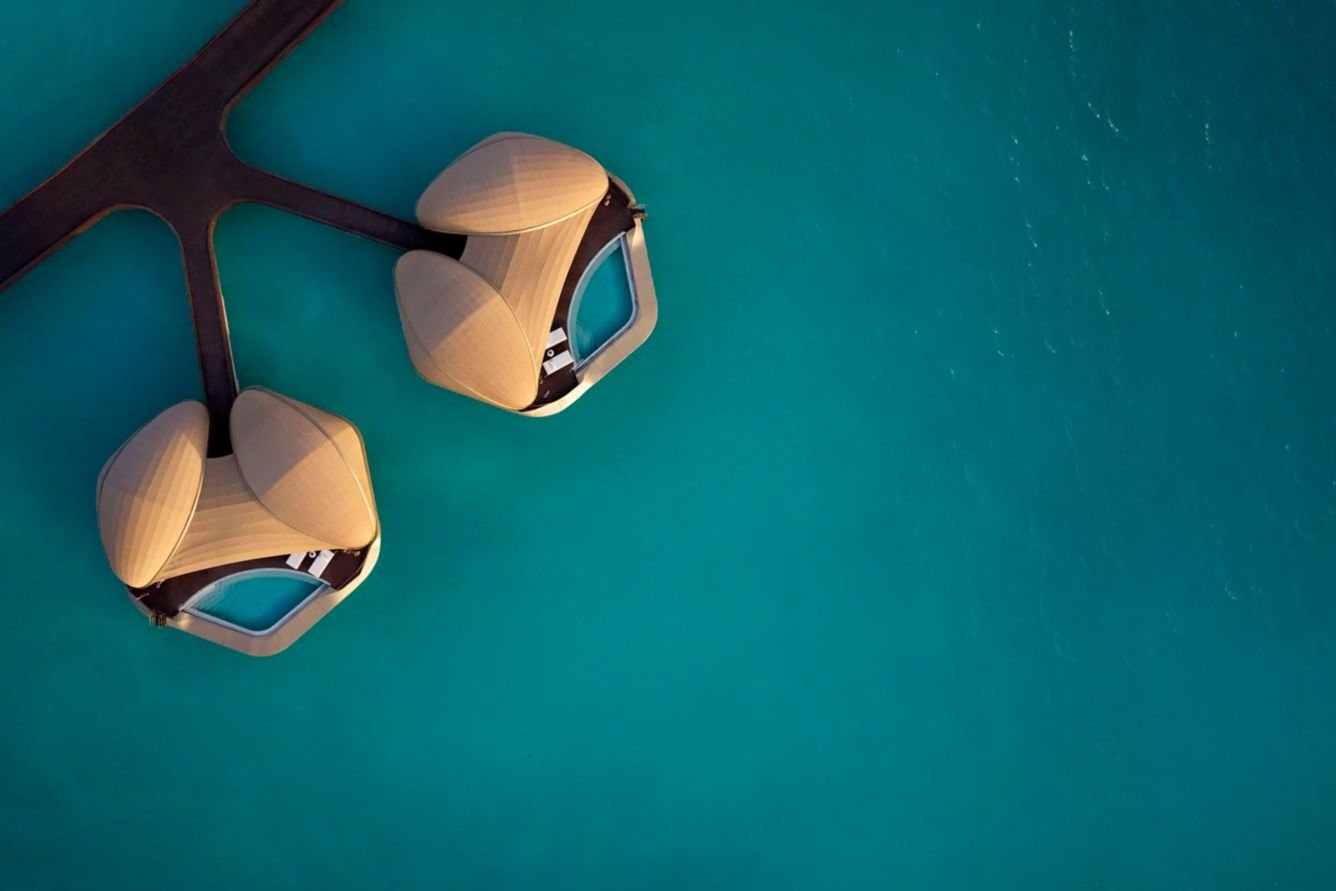
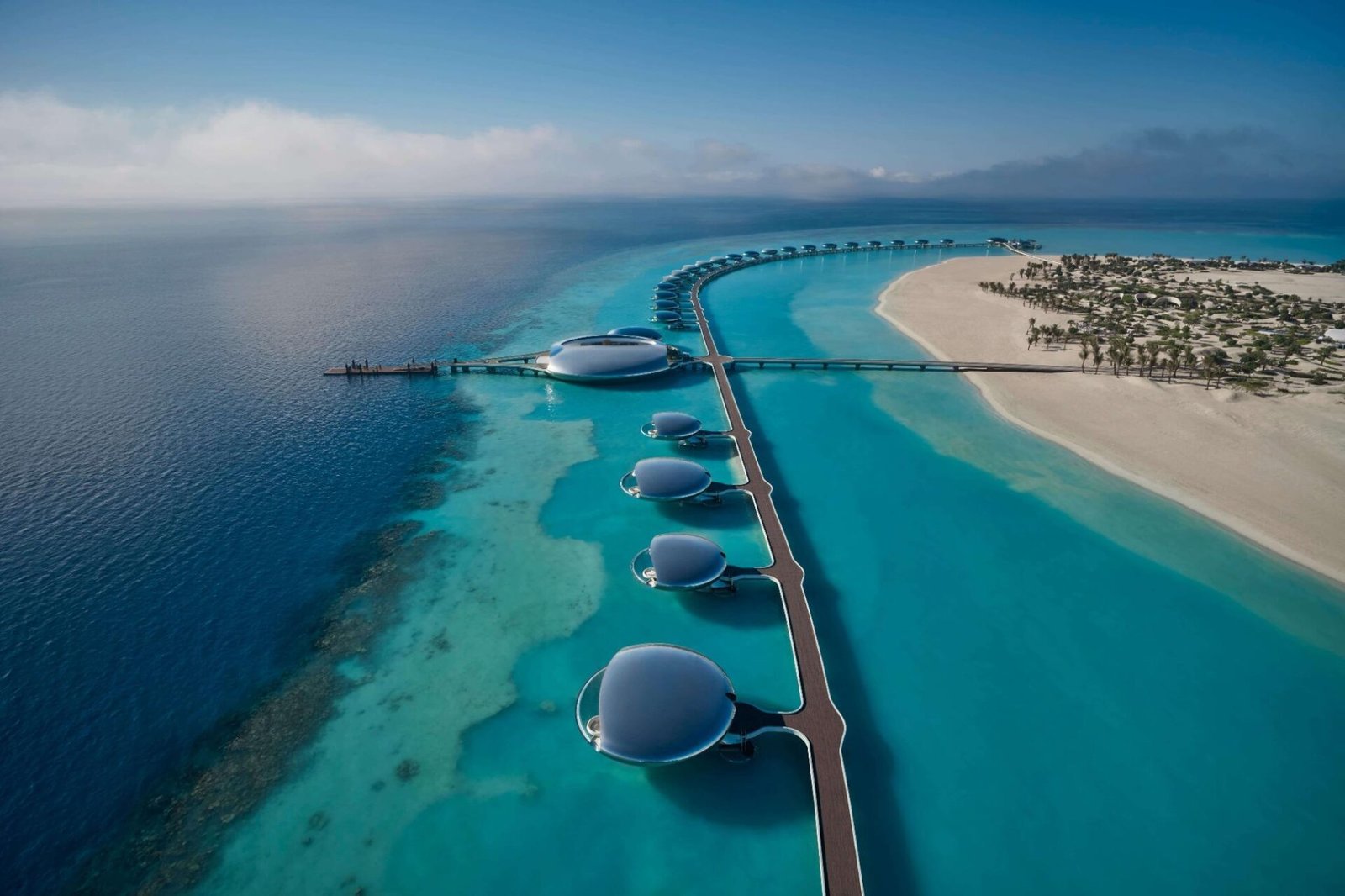
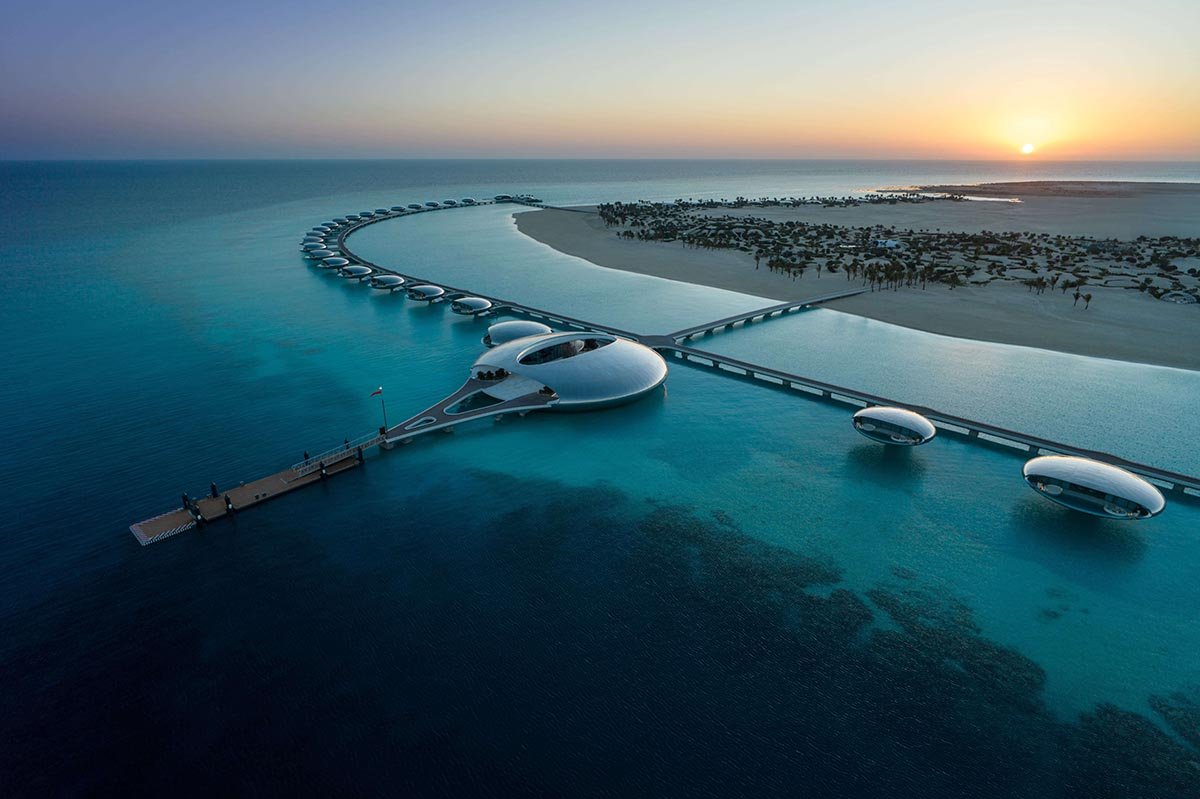
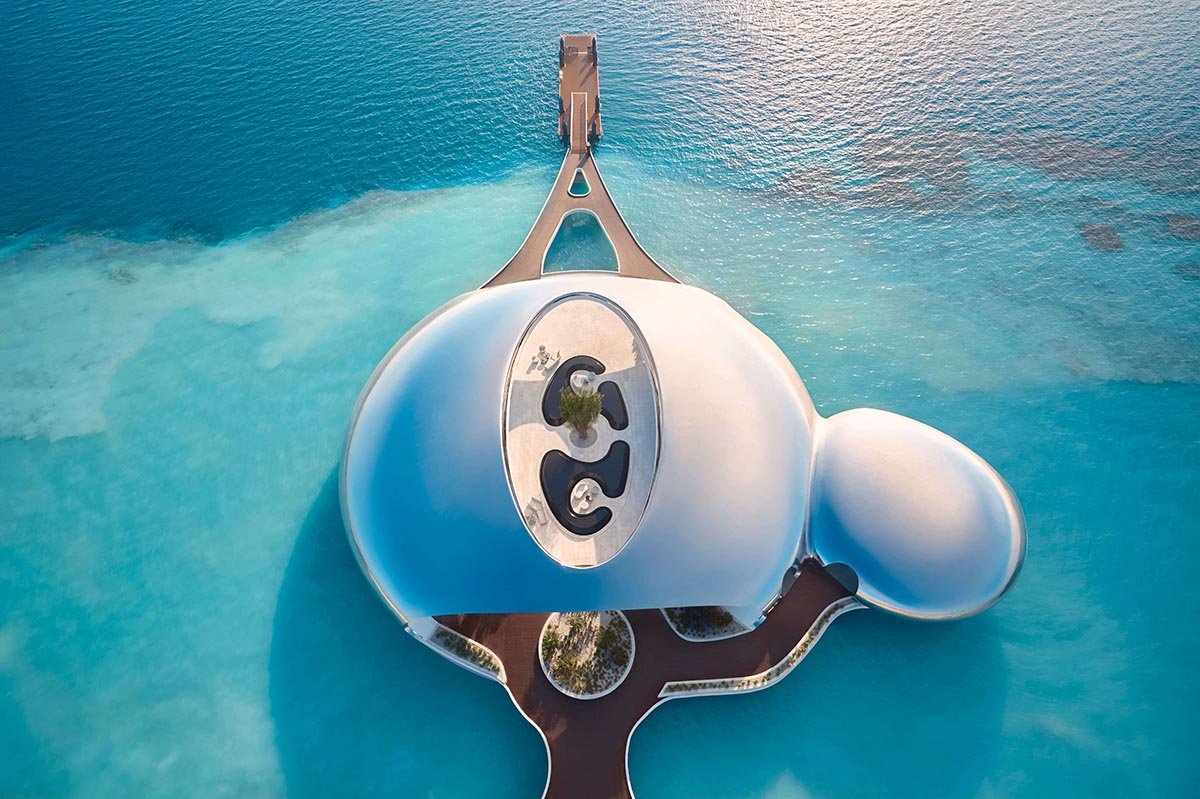
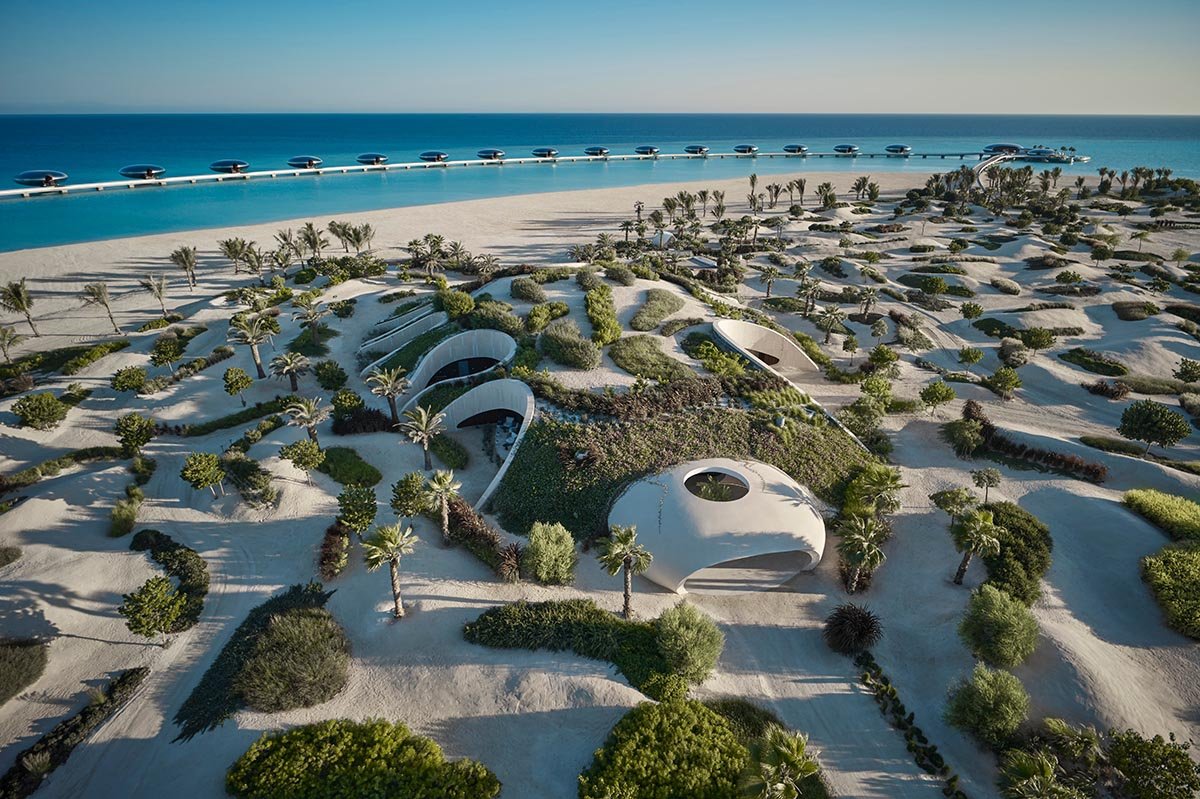
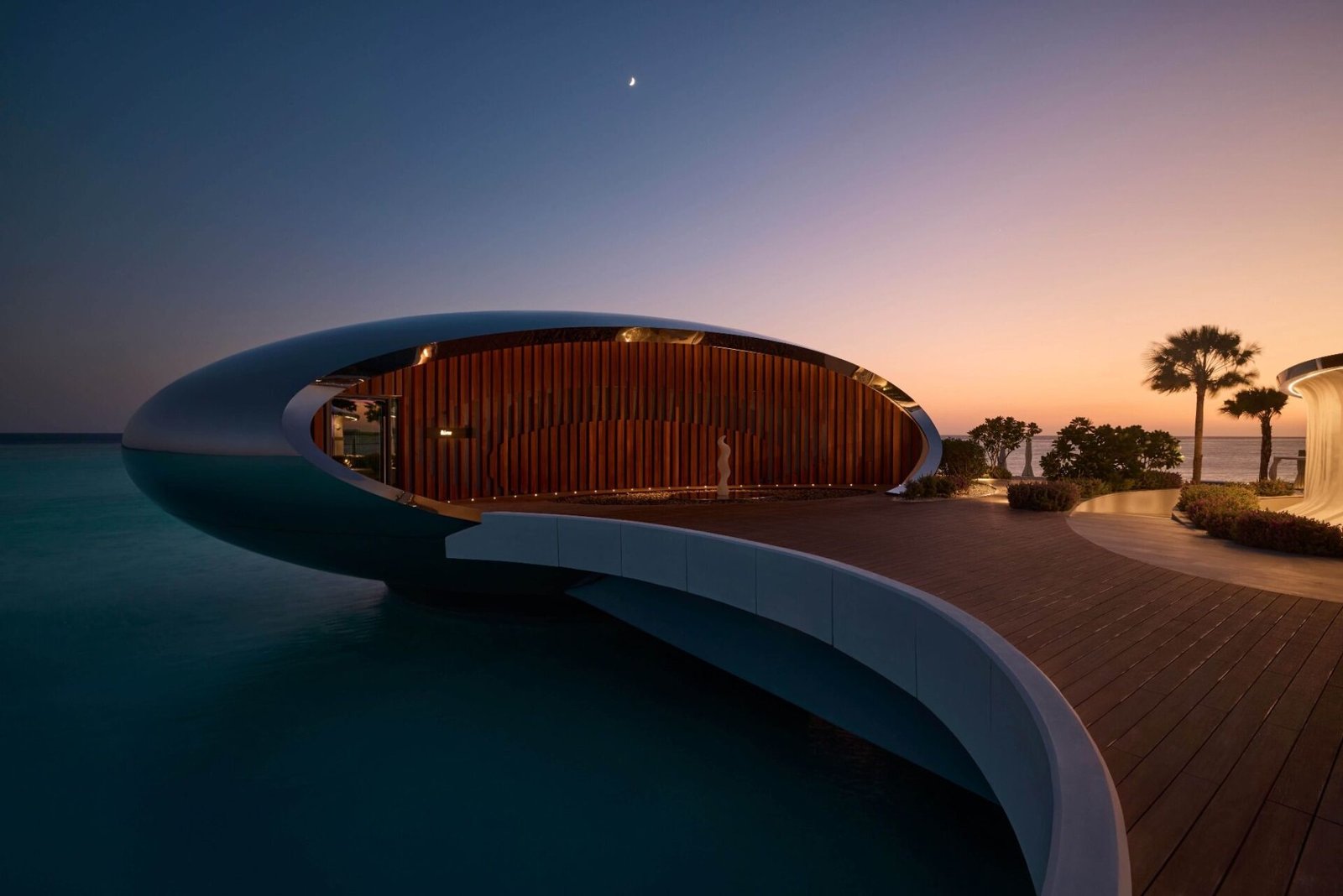
Shebara is the most visually striking resort on the Saudi Red Sea so far. It consists of 73 mirrored, spherical villas that appear to hover above the water, reflecting the sky and sea around them. Designed by Killa Design, the studio behind Dubai’s Museum of the Future, the architecture is bold but surprisingly restrained once you’re on-site.
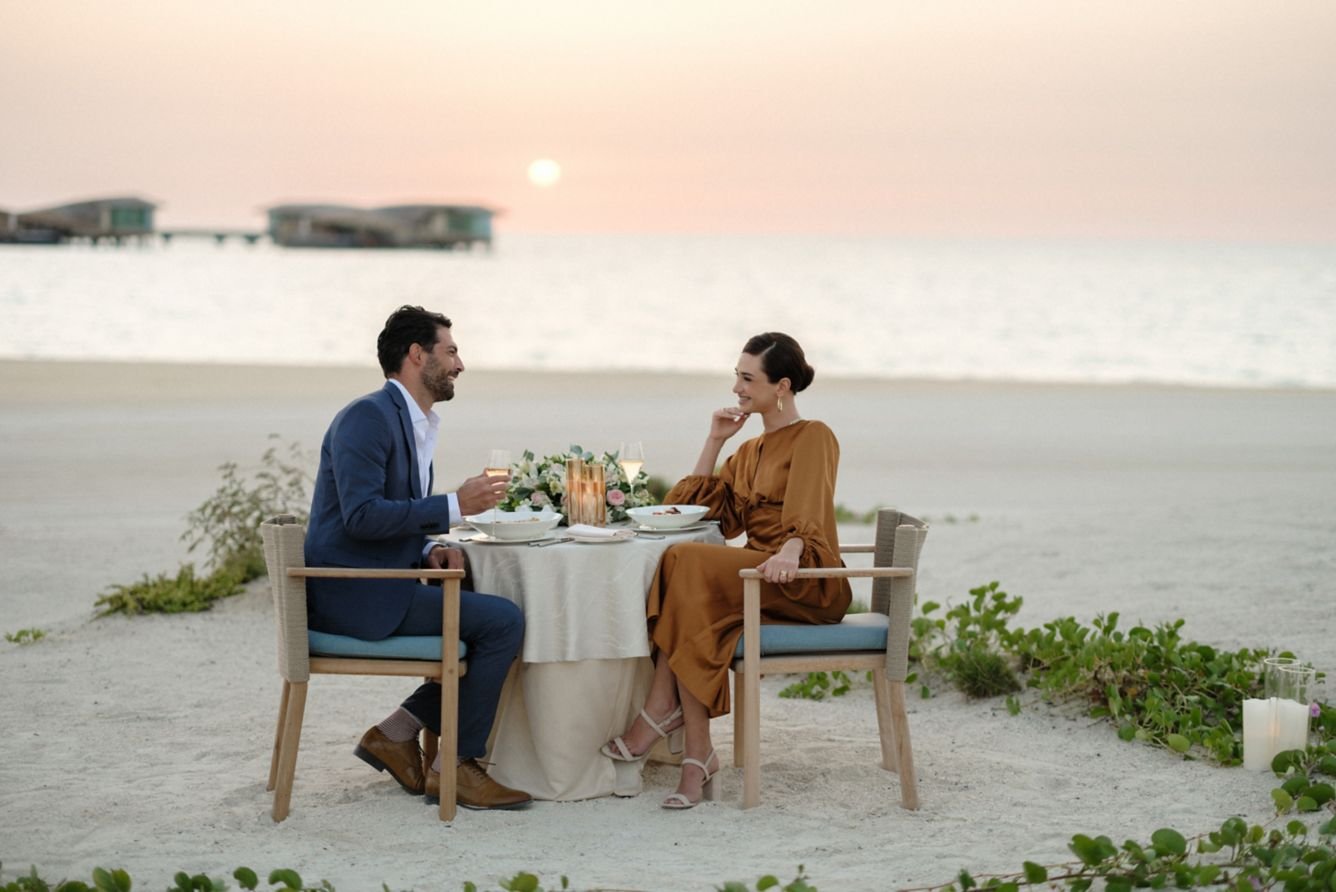
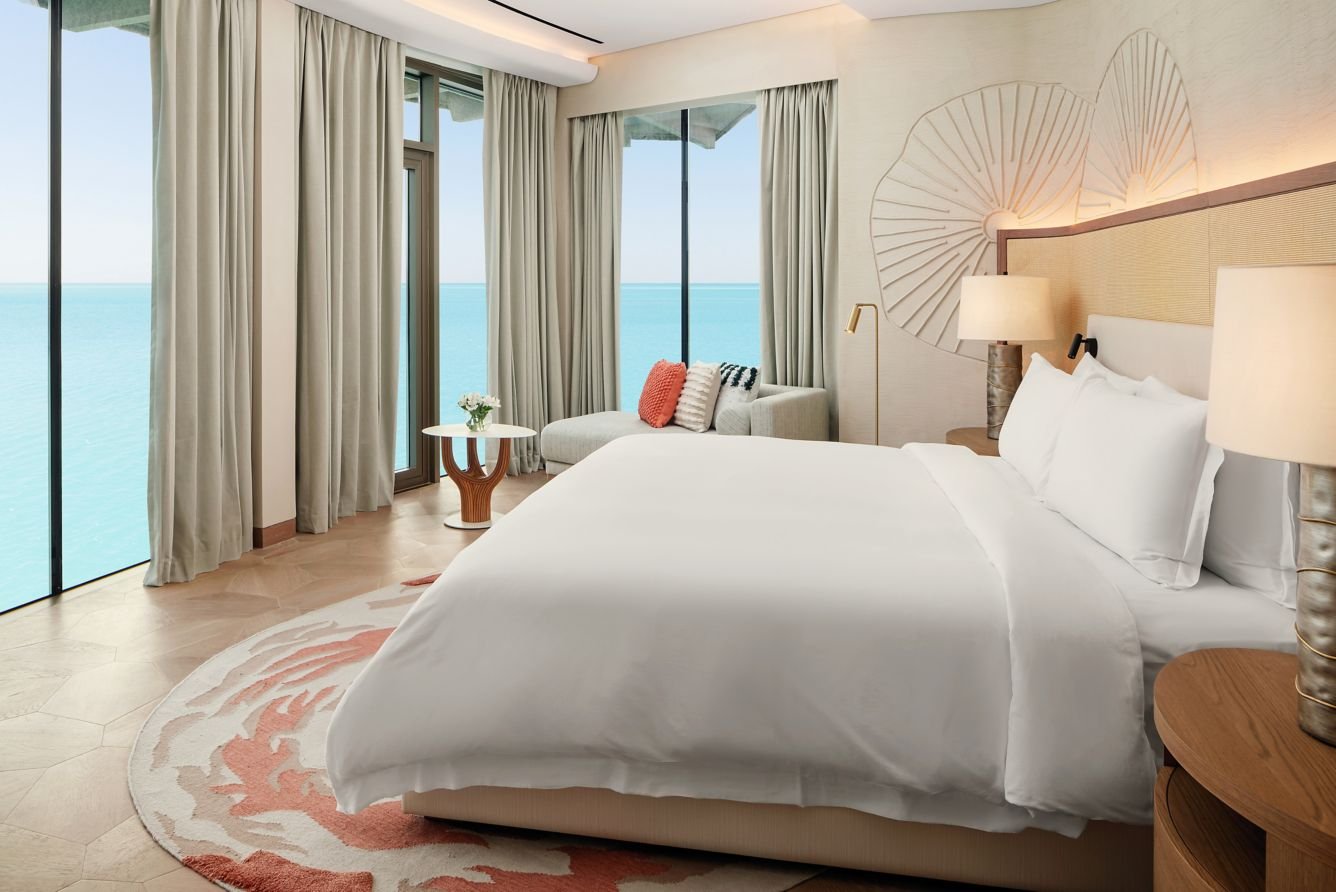
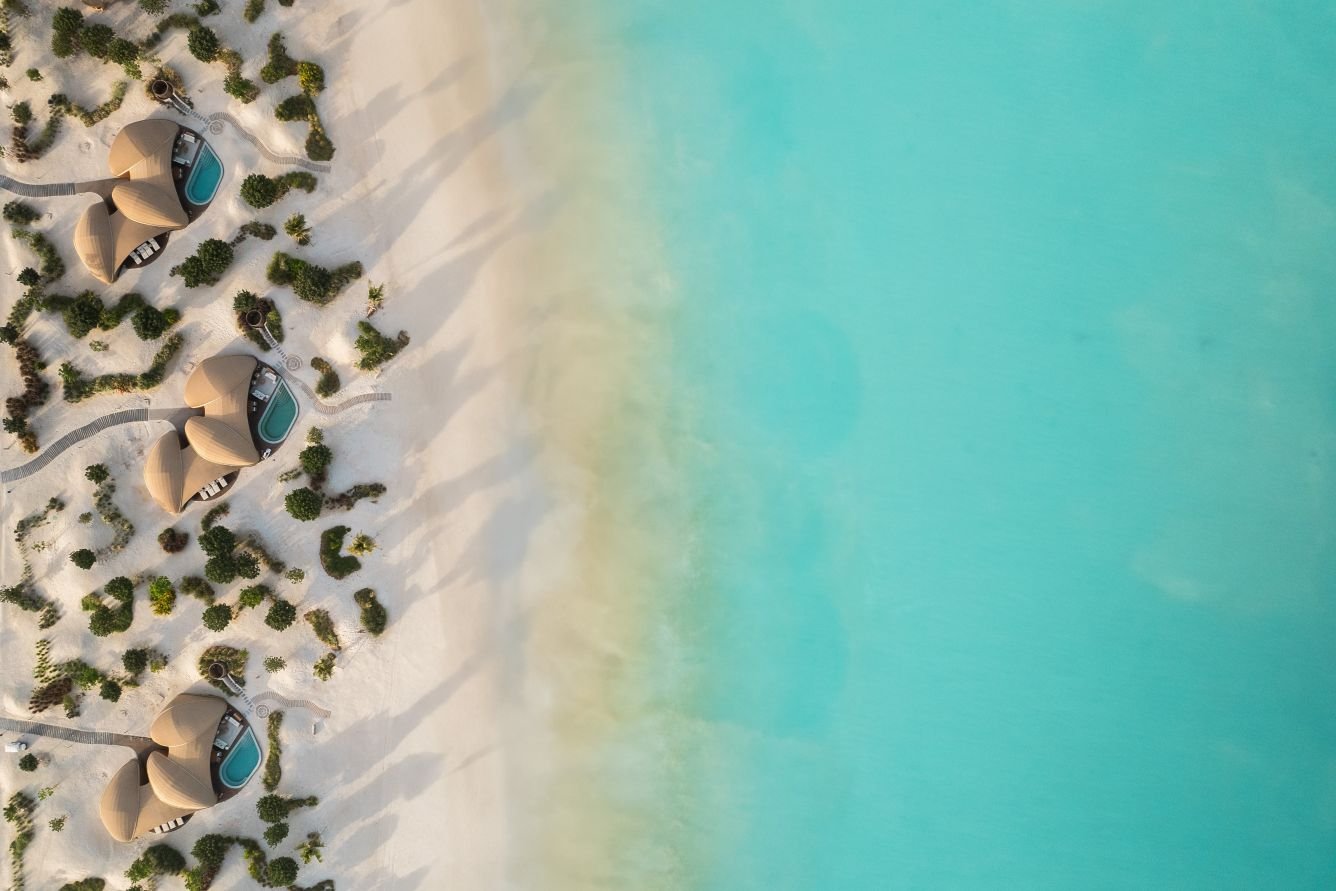
Access is only by boat or seaplane, which immediately sets the tone. Guests stay either in overwater villas with private pools or in beach villas tucked into low sand dunes. Interiors are clean and minimal, with the focus kept firmly on the surroundings.
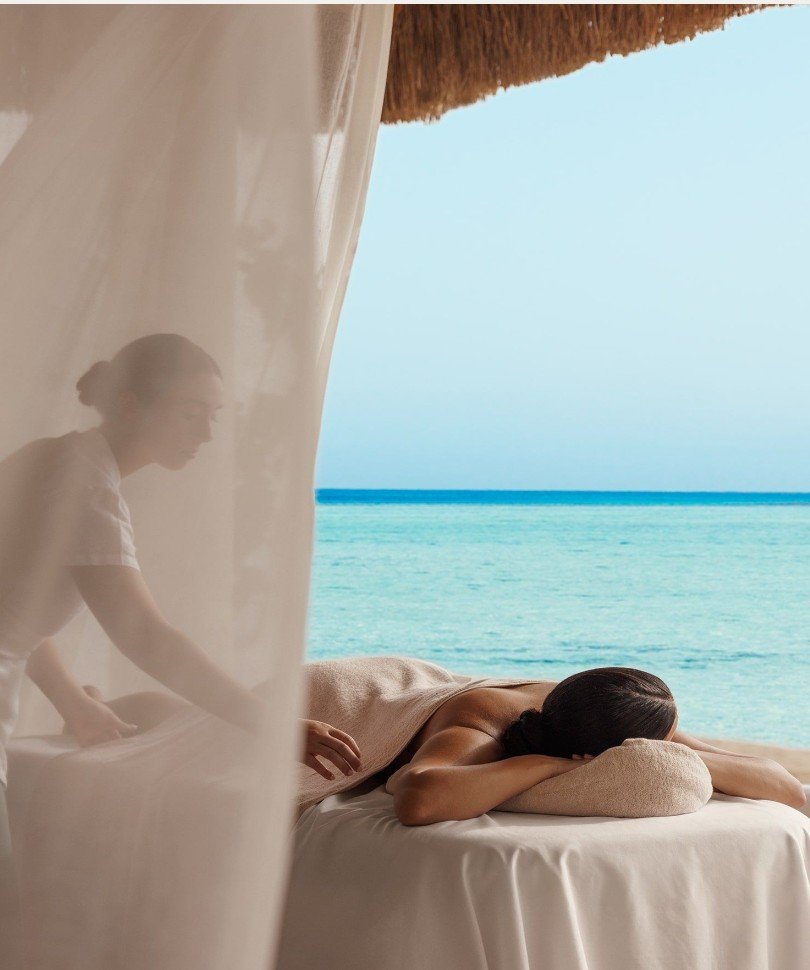
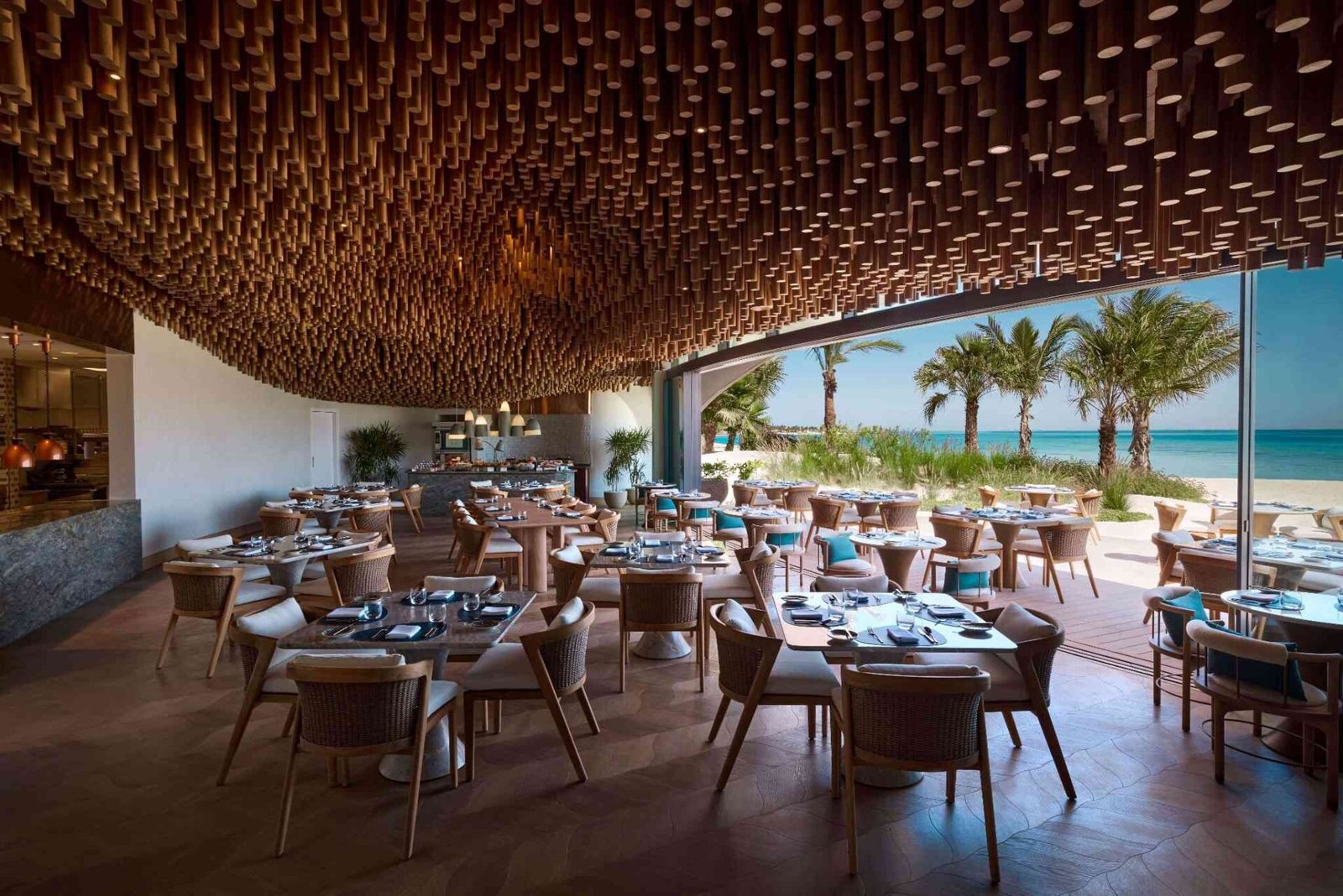
Days tend to be slow and water-centered—snorkeling over shallow reefs, swimming, or simply lingering over breakfast. Later, there’s e-foiling, spa treatments, or nothing at all. Dining is spread across a few focused venues, including Japanese-Peruvian at Iki.Roe and Italian at Ariamare. The resort runs entirely on solar power and, despite its dramatic design, feels calm rather than showy.
Desert Rock
An otherworldly rocky escape.
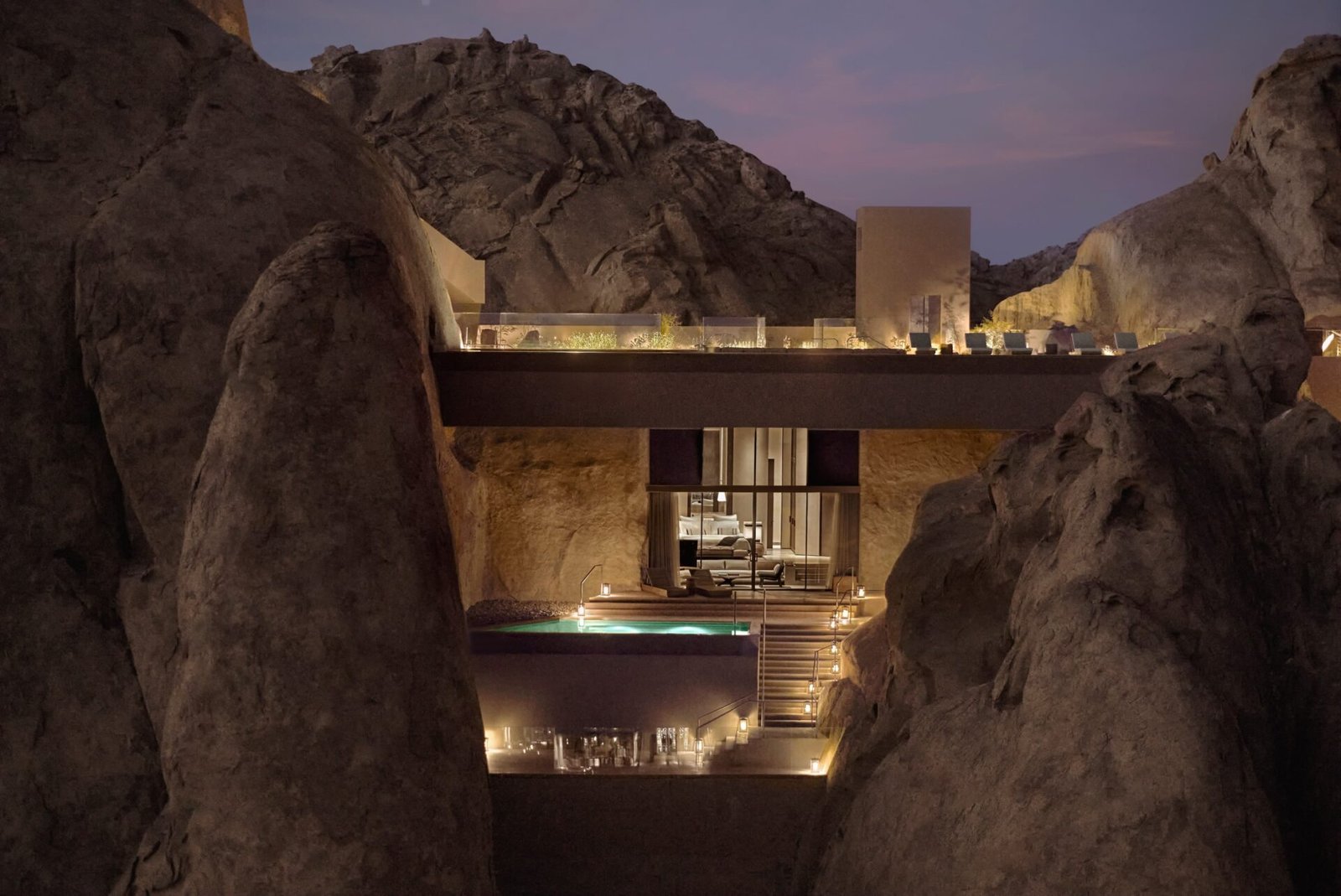
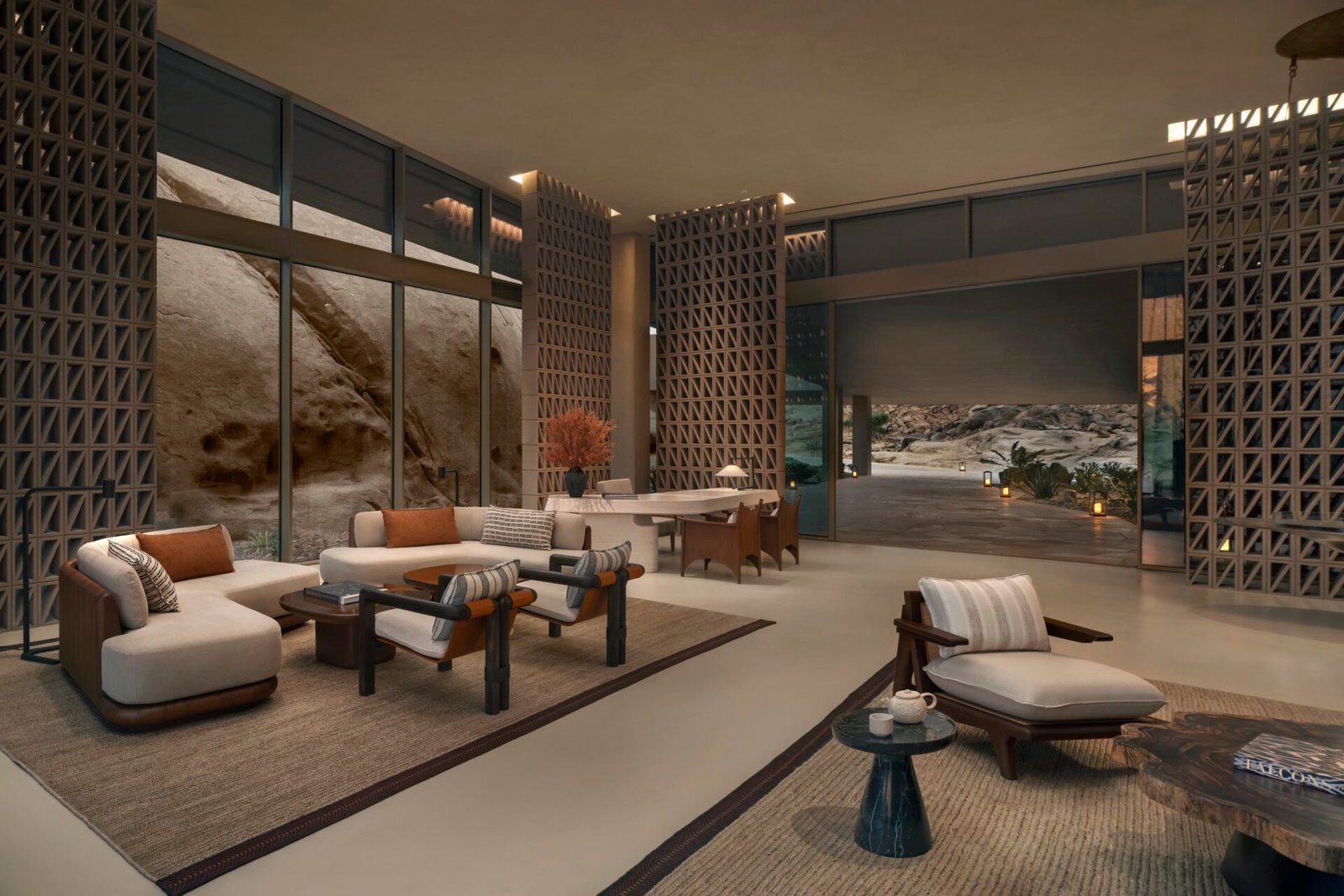
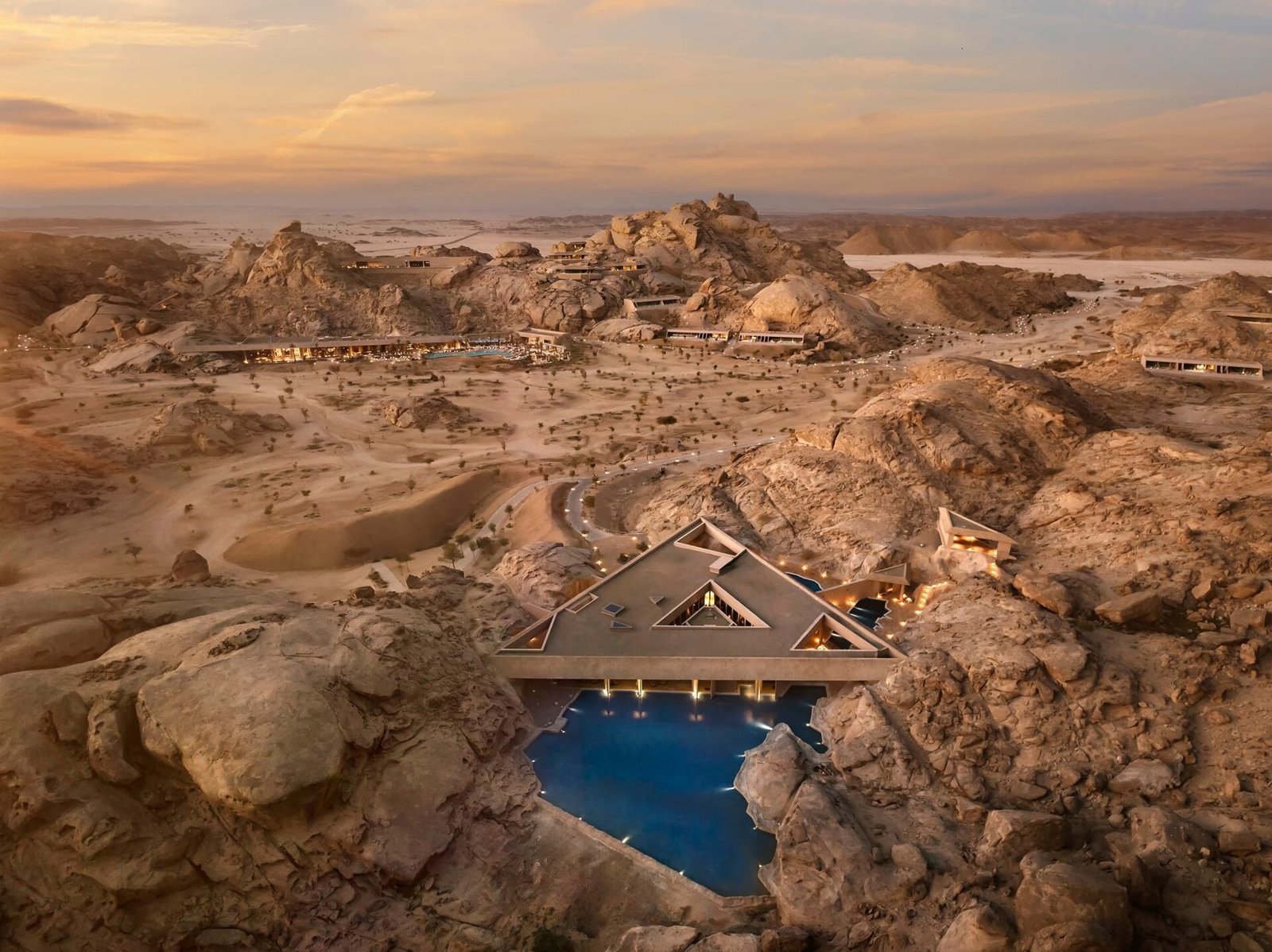
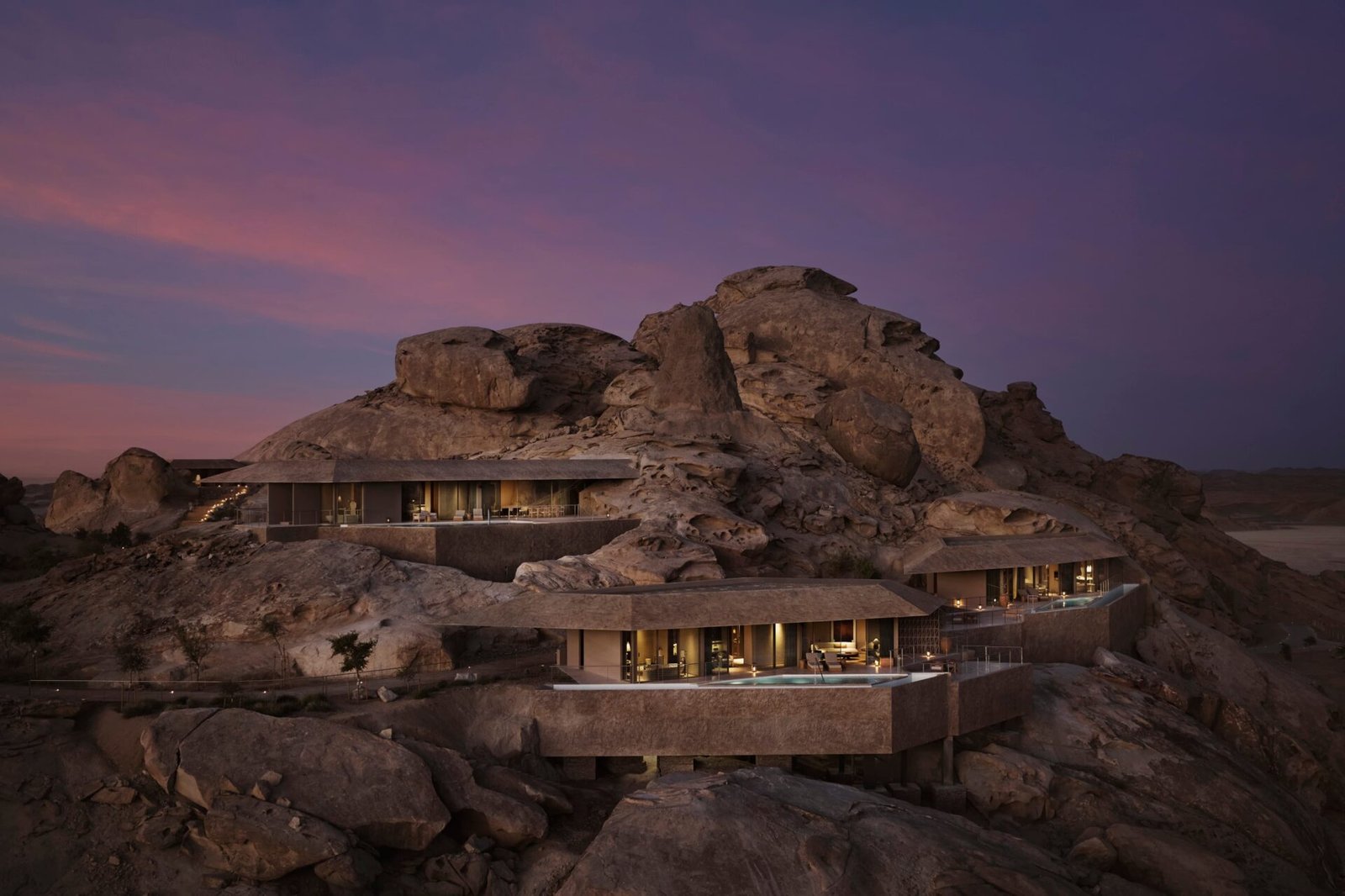
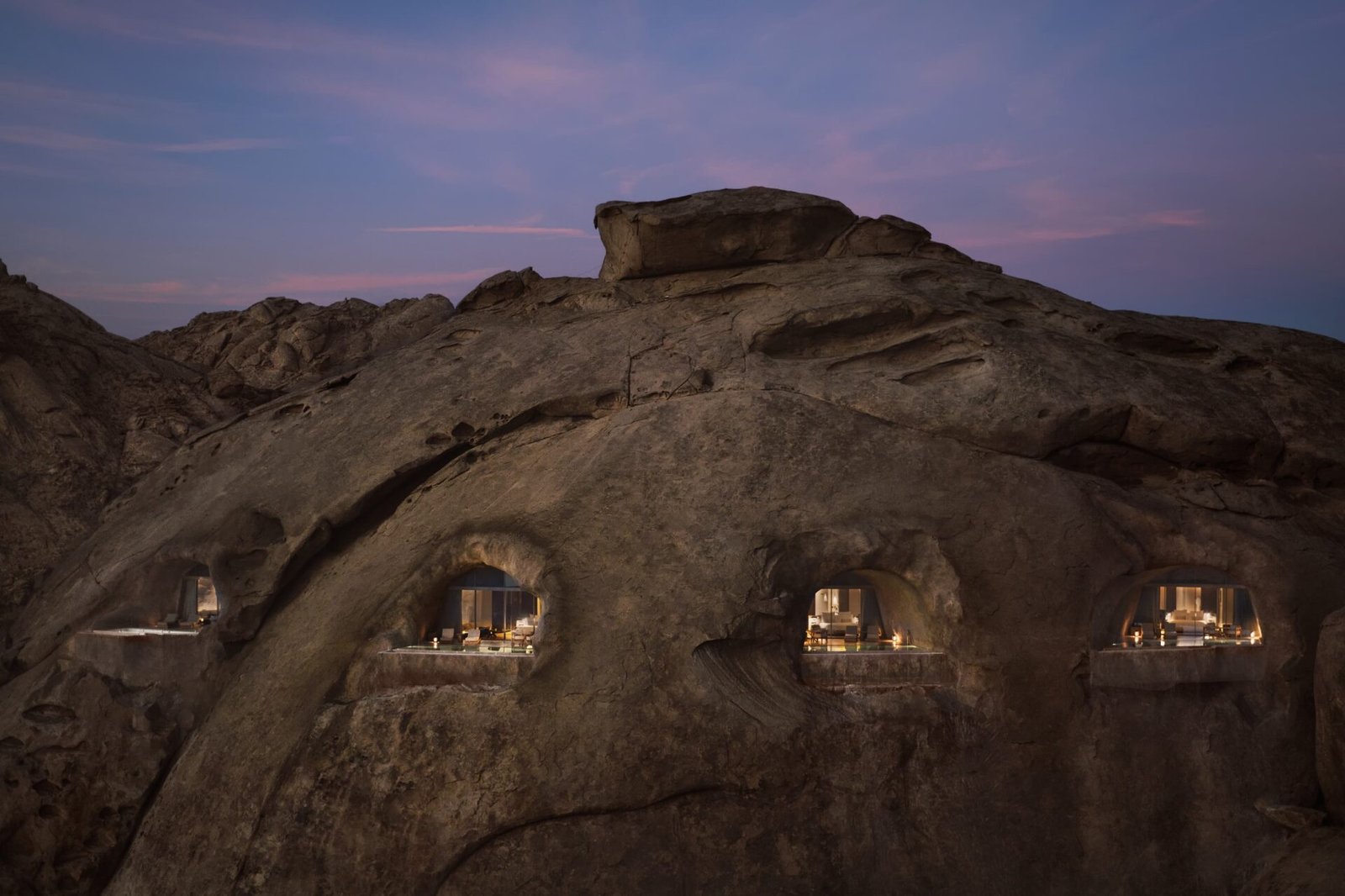
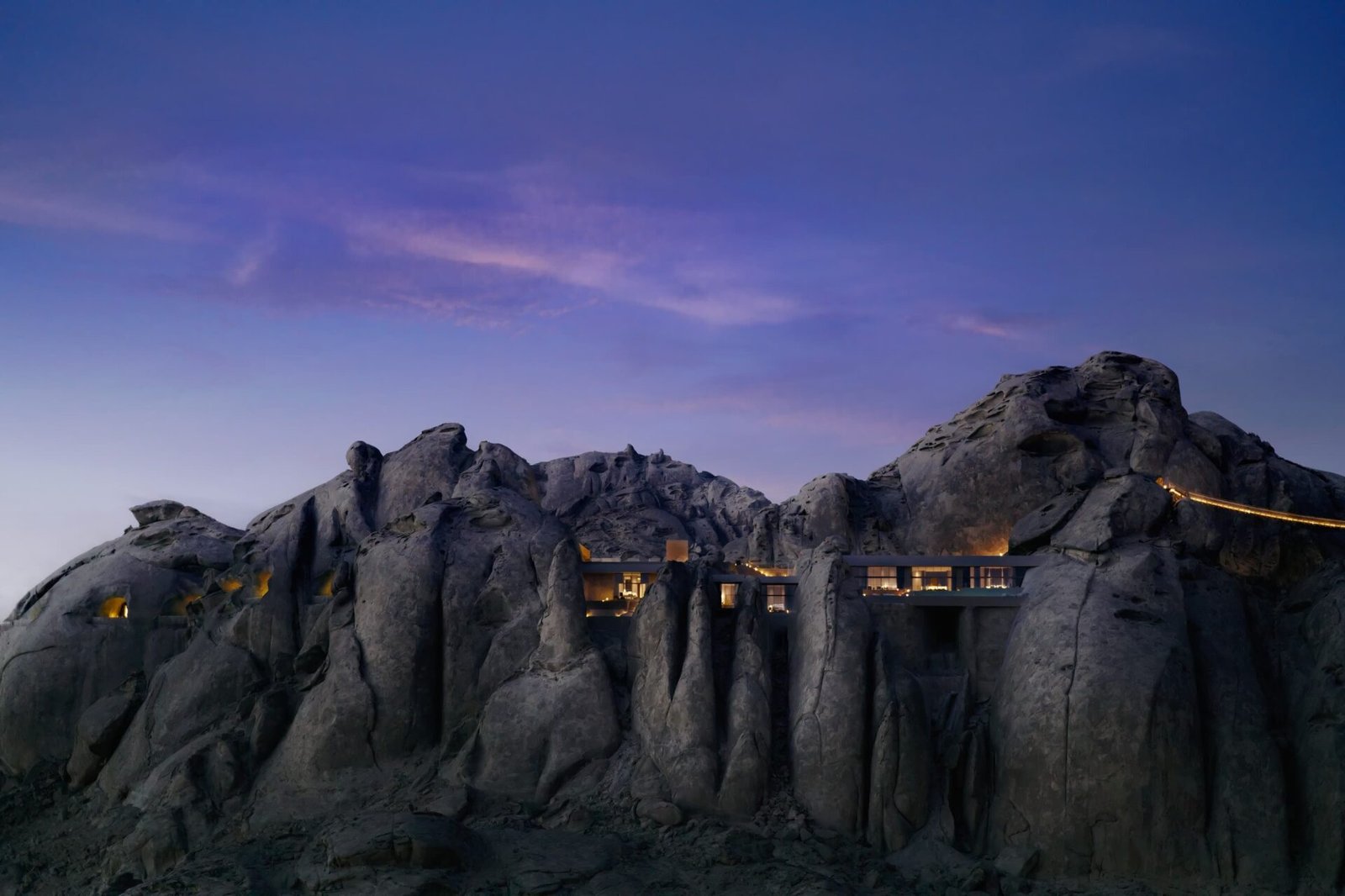
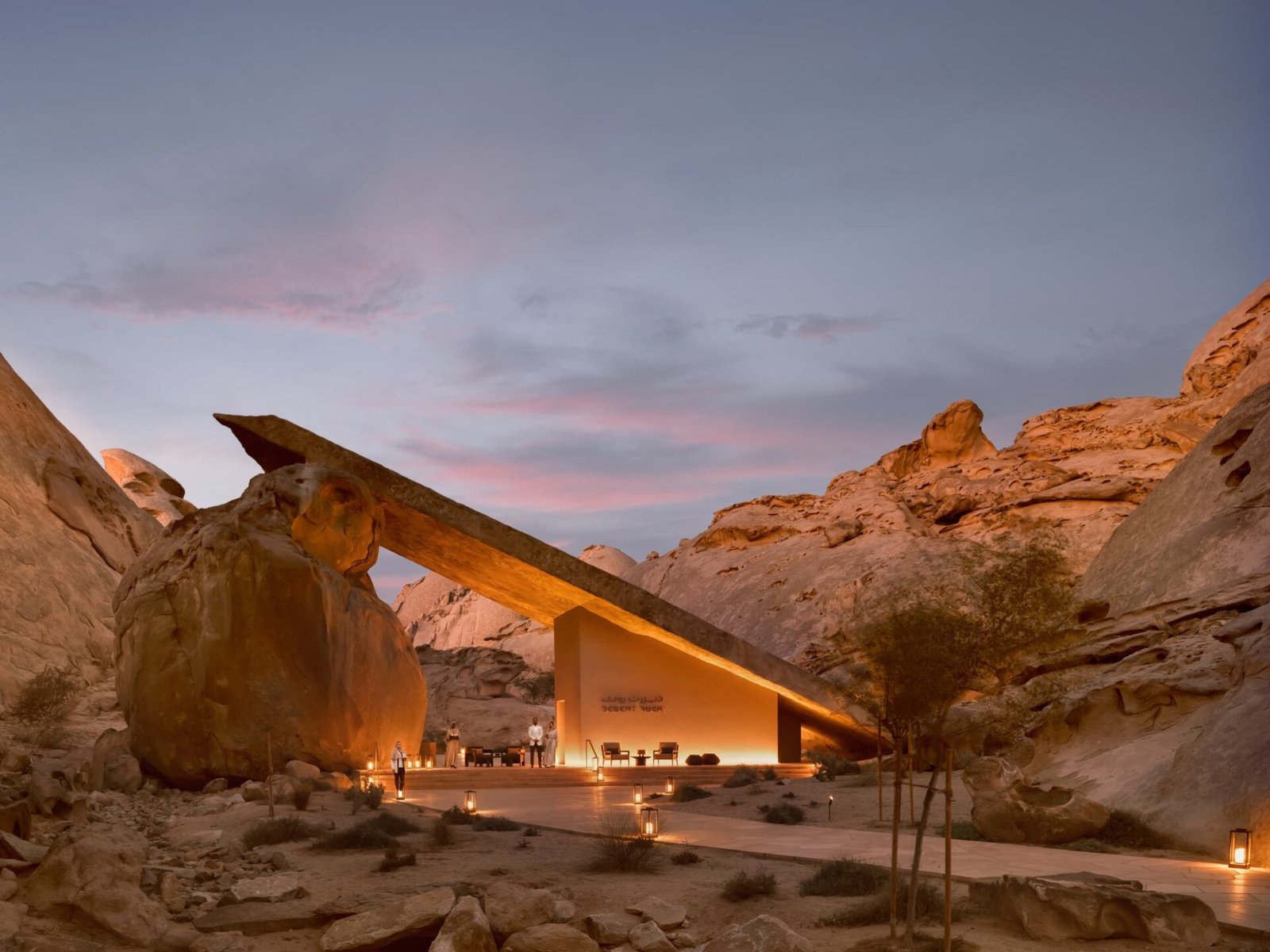
Desert Rock takes a completely different approach. Instead of building on the coast, it’s set inland among ancient rock formations. Designed by Oppenheim Architecture, the resort is carved directly into the cliffs, with villas that feel more like part of the landscape than additions to it.
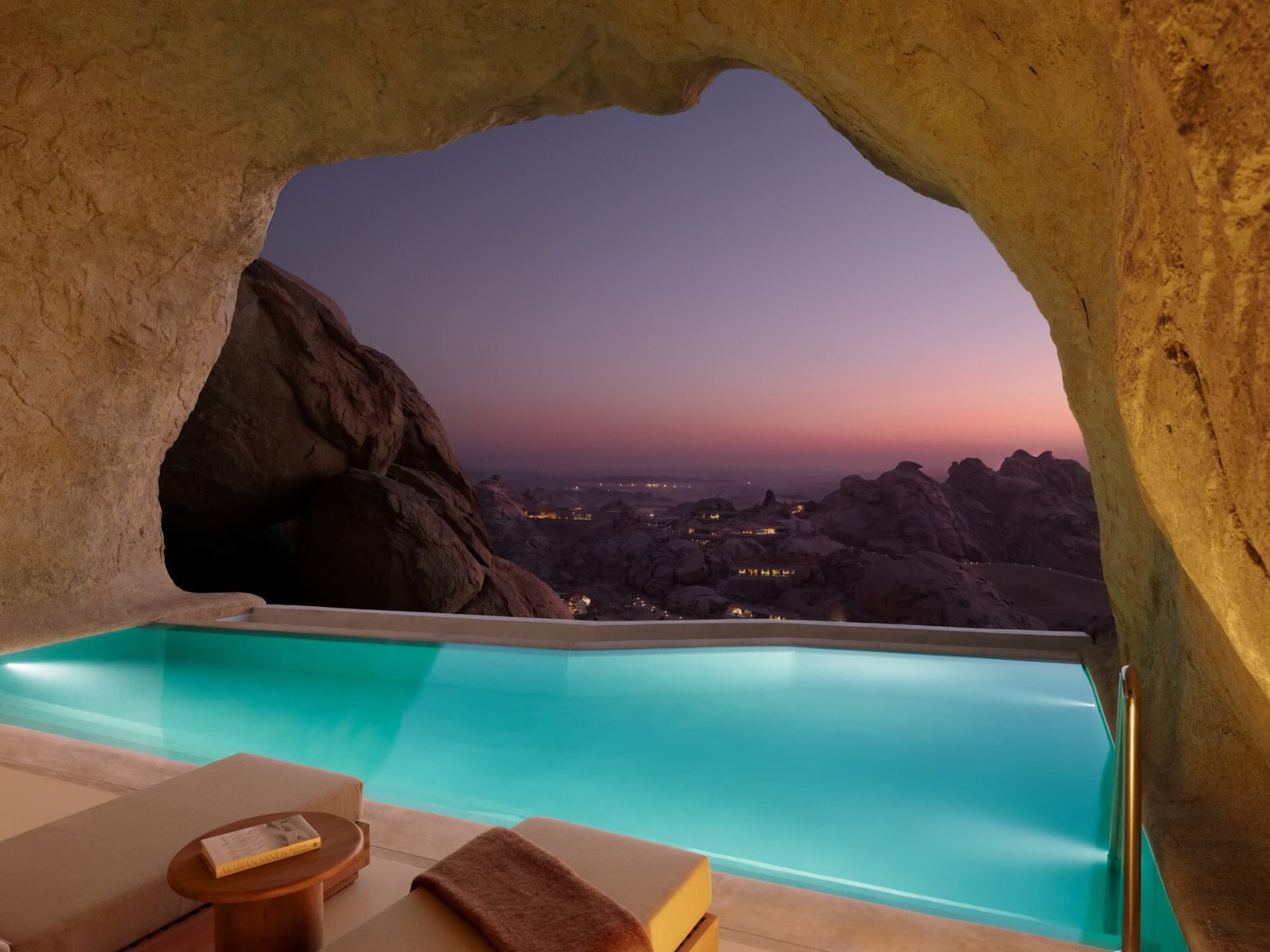
Here, the terrain defines the experience. Pools are hewn from stone, walkways wind through narrow gorges, and activities include zip-lining and rappelling through canyons. Interiors are minimal and monolithic, softened with high-quality linens and natural materials. Some villas sit inside caves; others are perched high above the valley floor.
Dining matches the setting. Nyra, led by chef Osman Sezener, serves modern Middle Eastern dishes with a strong focus on seasonal ingredients. There’s also Indian cuisine at Basalt and a hidden shisha lounge at the top of the mountain—reached by climbing 630 steps. Desert Rock feels less like a traditional resort and more like a controlled encounter with the landscape.
Thuwal Private Retreat
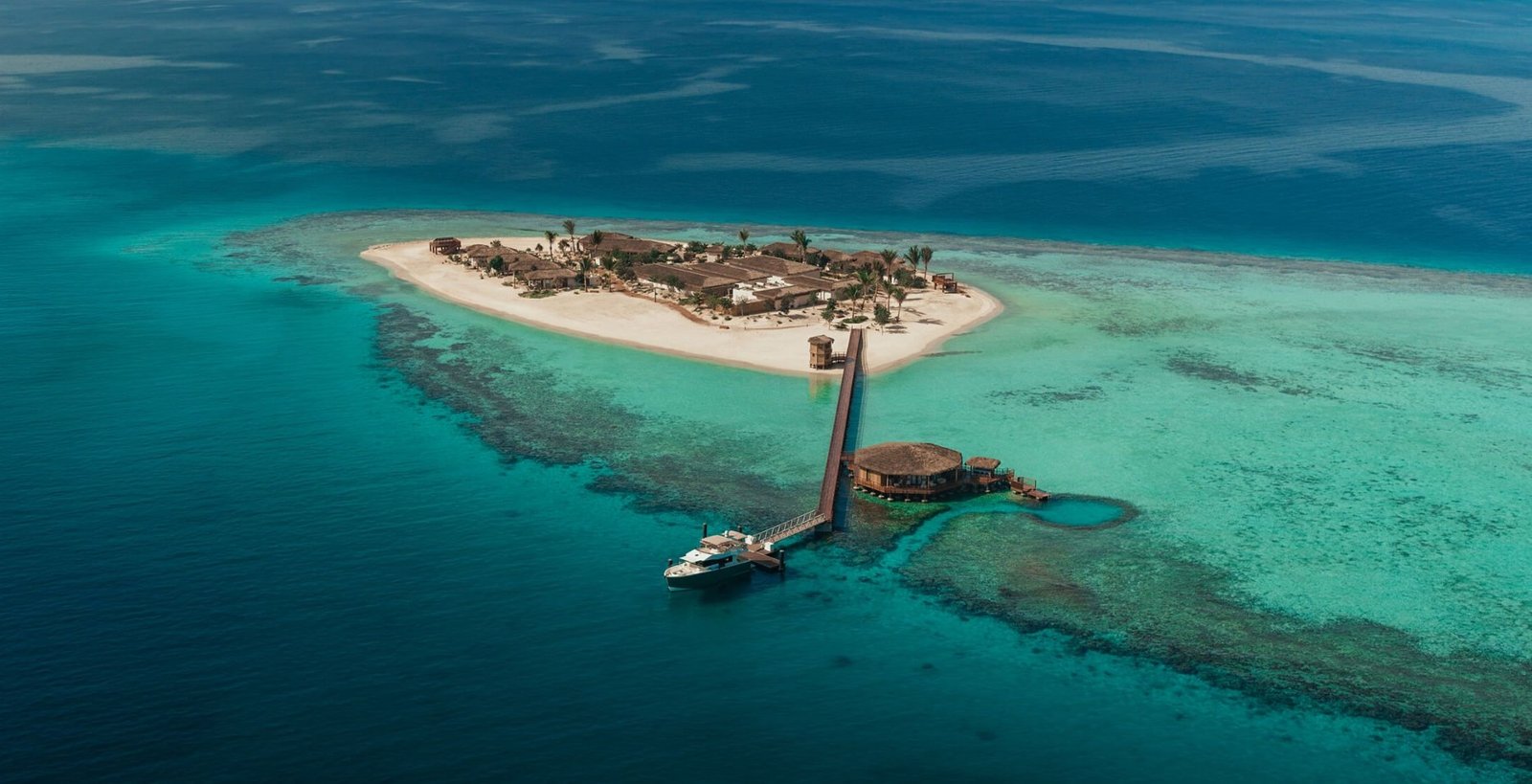
Thuwal is for travelers who don’t want a hotel at all. The entire island—six villas, a private beach, and all facilities, is reserved for one group at a time. It’s designed for families or close groups who value privacy above everything else.
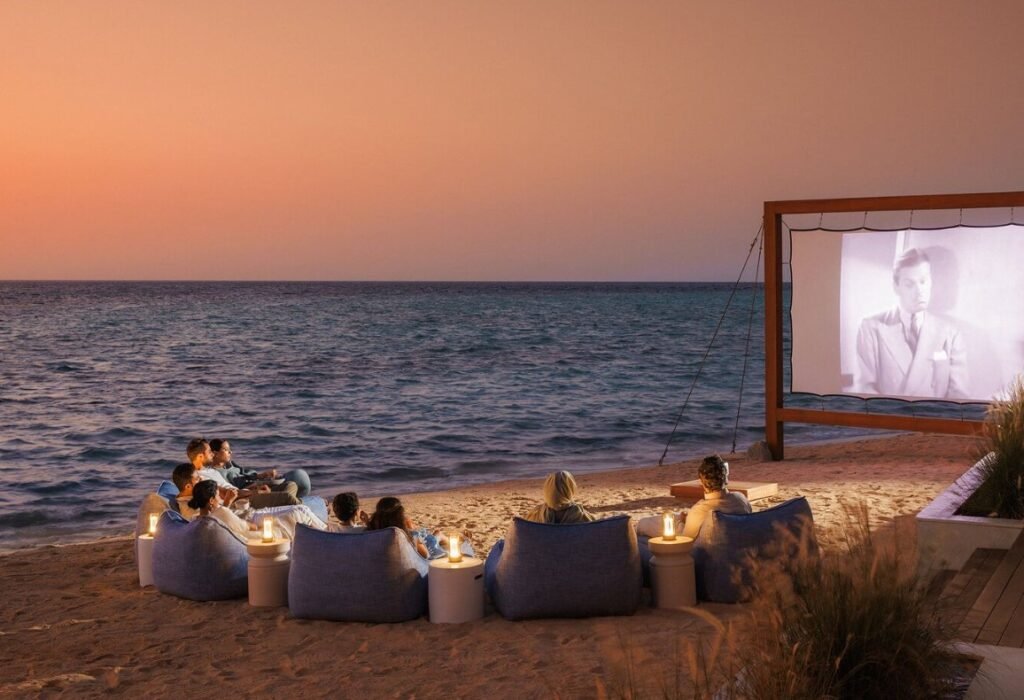
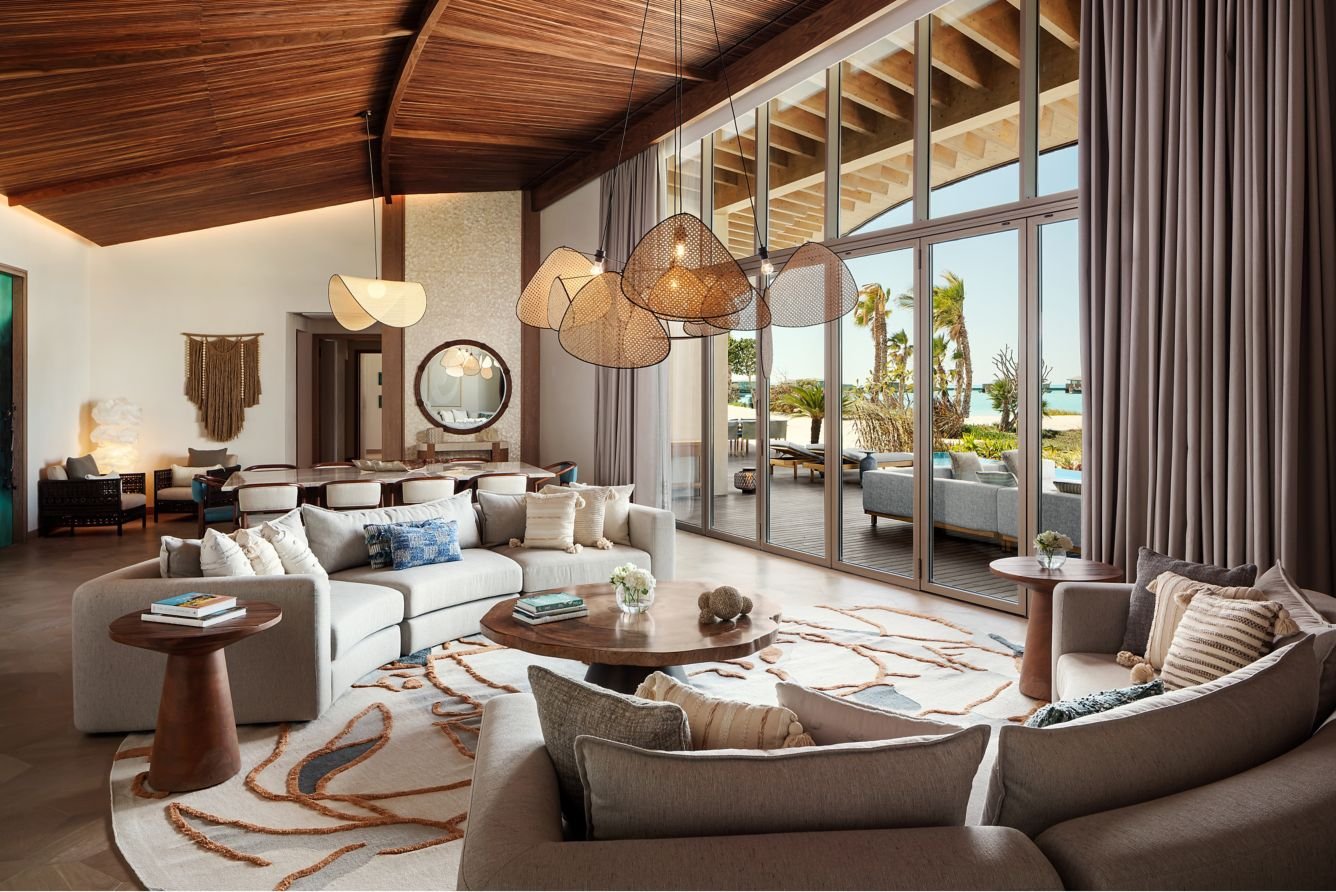
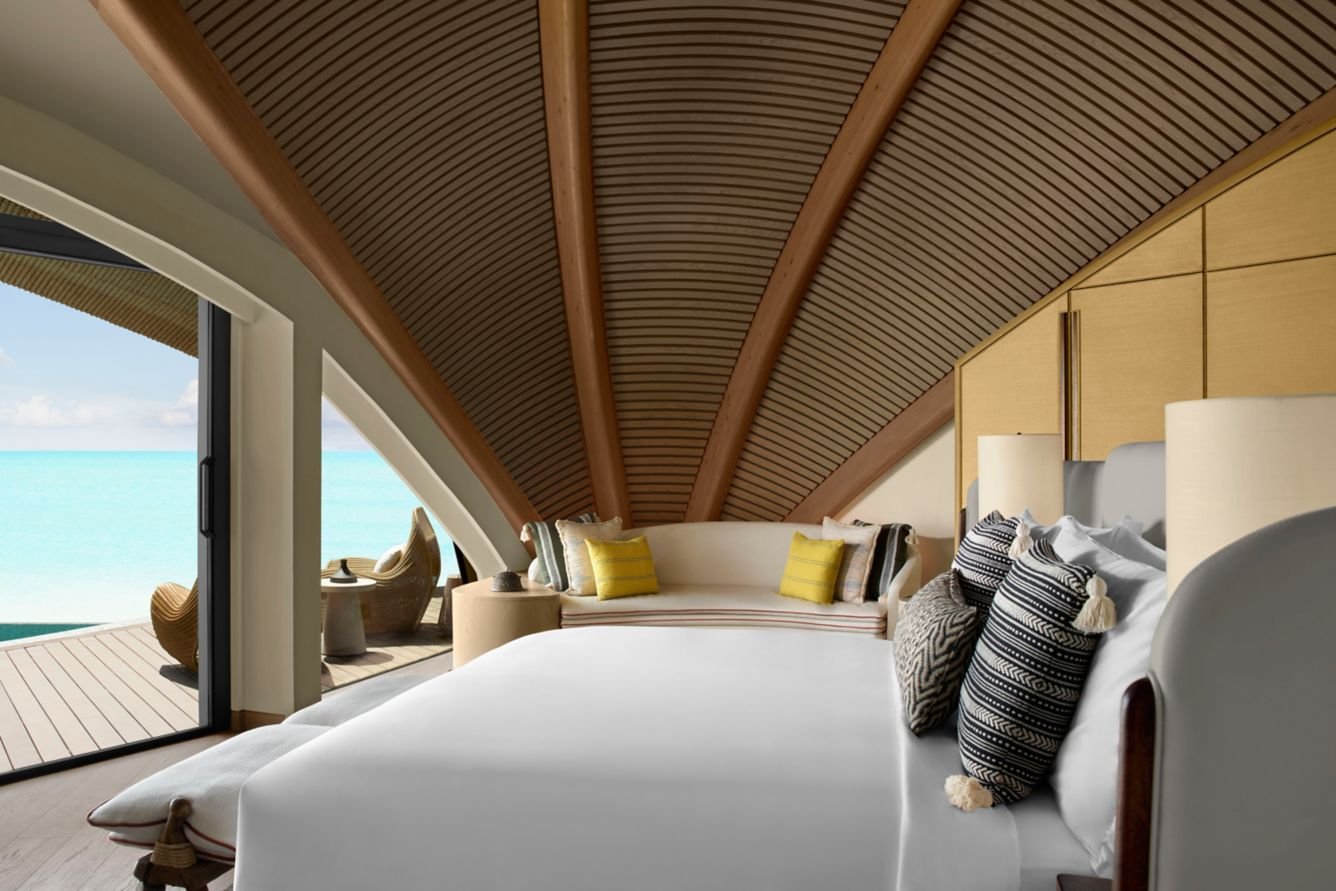
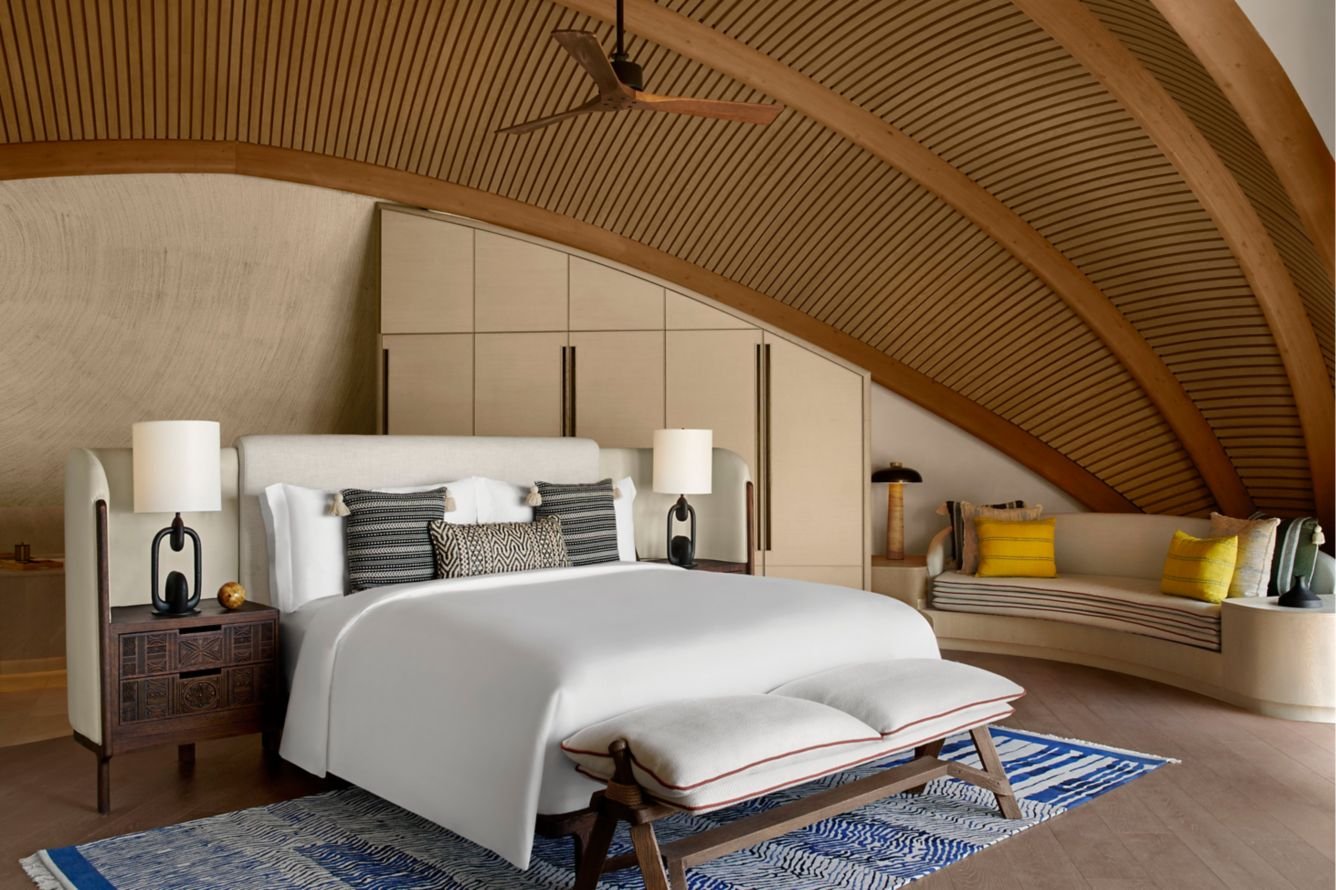
The villas are relaxed and informal, with soft colors, arched ceilings, and a lived-in feel. There’s a diwaniya lounge over the water, an outdoor cinema, and a beach bar serving non-alcoholic drinks at sunset.
What stands out most is the service. Meals are fully personalized, often based on offhand comments made the day before. A private chef and dedicated staff handle everything quietly and efficiently, reflecting a very Saudi approach to hospitality—warm, generous, and unforced. There are no other guests, because you’re the only ones there.
Your Bespoke Island
The St. Regis Red Sea Resort
Here, the terrain defines the experience. Pools are hewn from stone, walkways wind through narrow gorges, and activities include zip-lining and rappelling through canyons. Interiors are minimal and monolithic, softened with high-quality linens and natural materials. Some villas sit inside caves; others are perched high above the valley floor.
Dining matches the setting. Nyra, led by chef Osman Sezener, serves modern Middle Eastern dishes with a strong focus on seasonal ingredients. There’s also Indian cuisine at Basalt and a hidden shisha lounge at the top of the mountain—reached by climbing 630 steps. Desert Rock feels less like a traditional resort and more like a controlled encounter with the landscape.
Timeless Sophistication
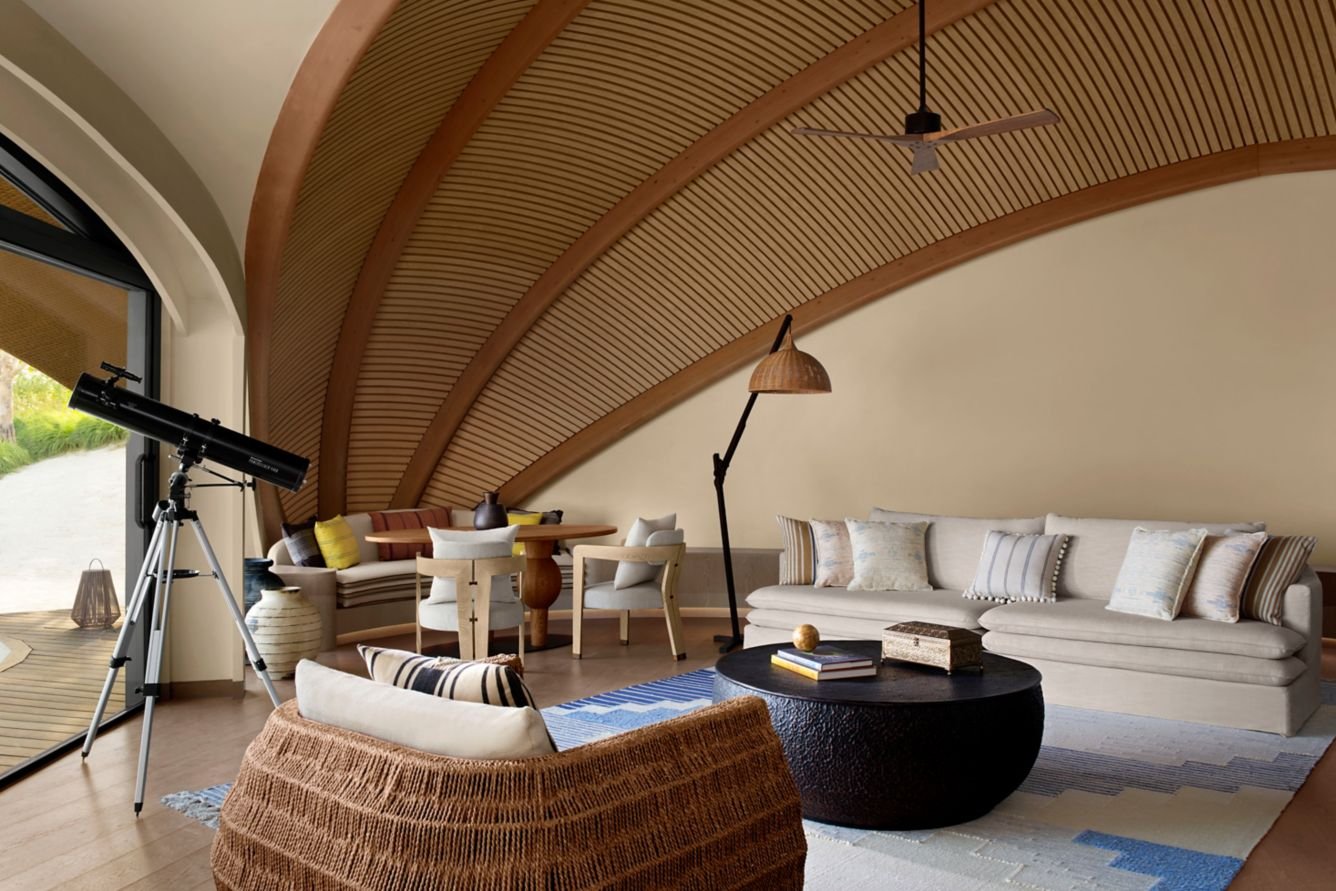
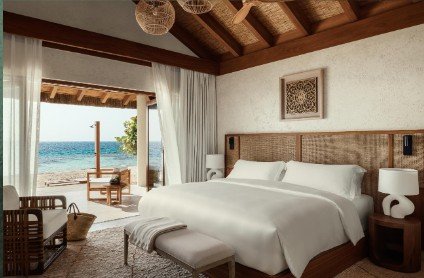
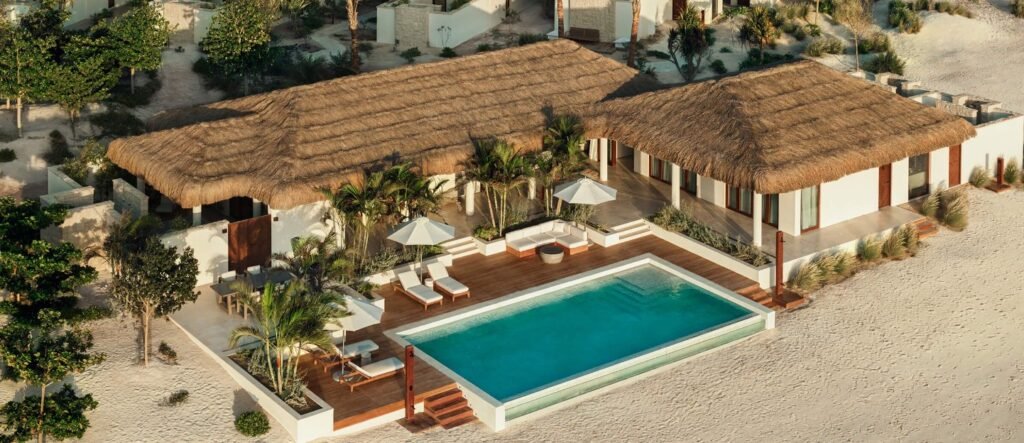
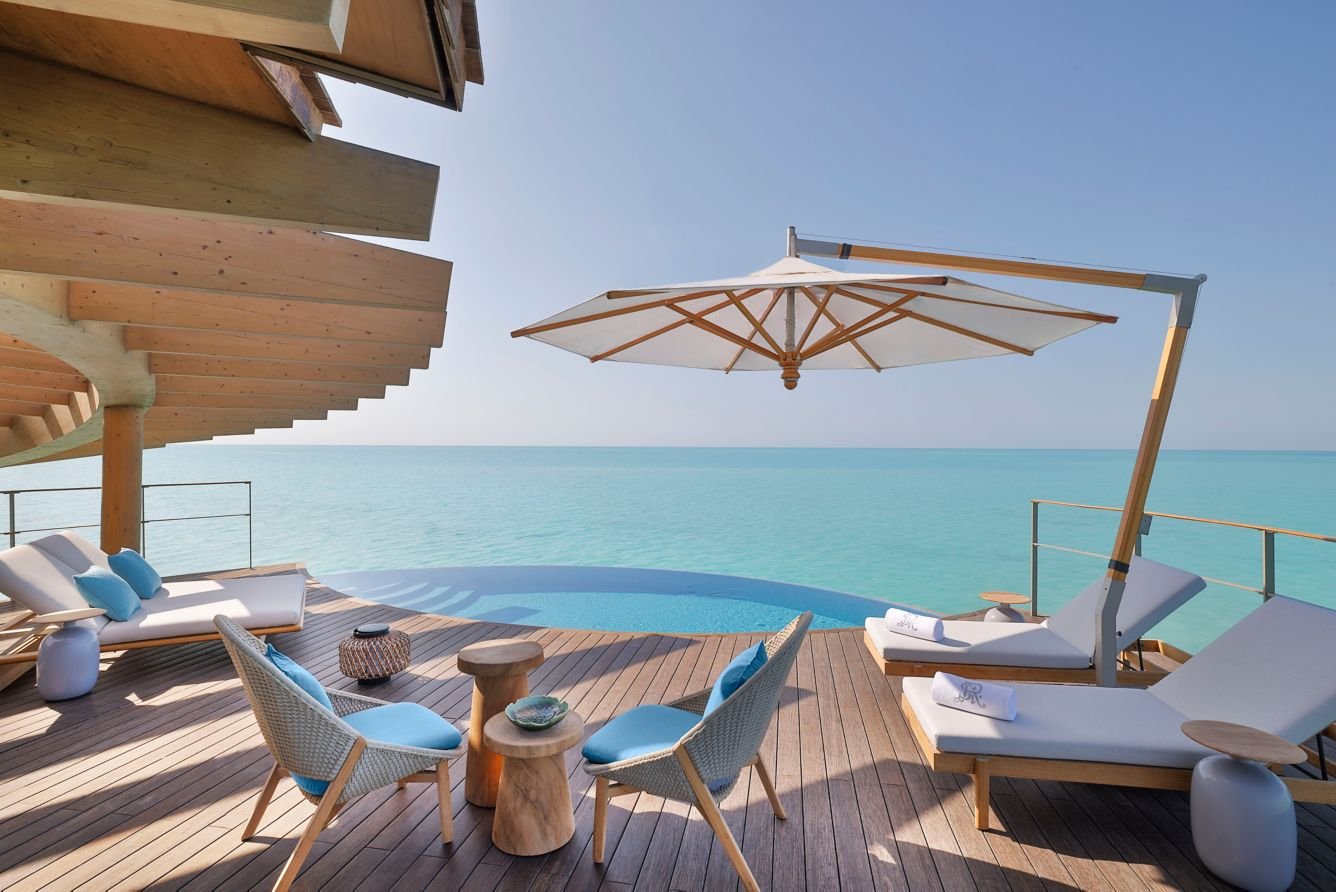
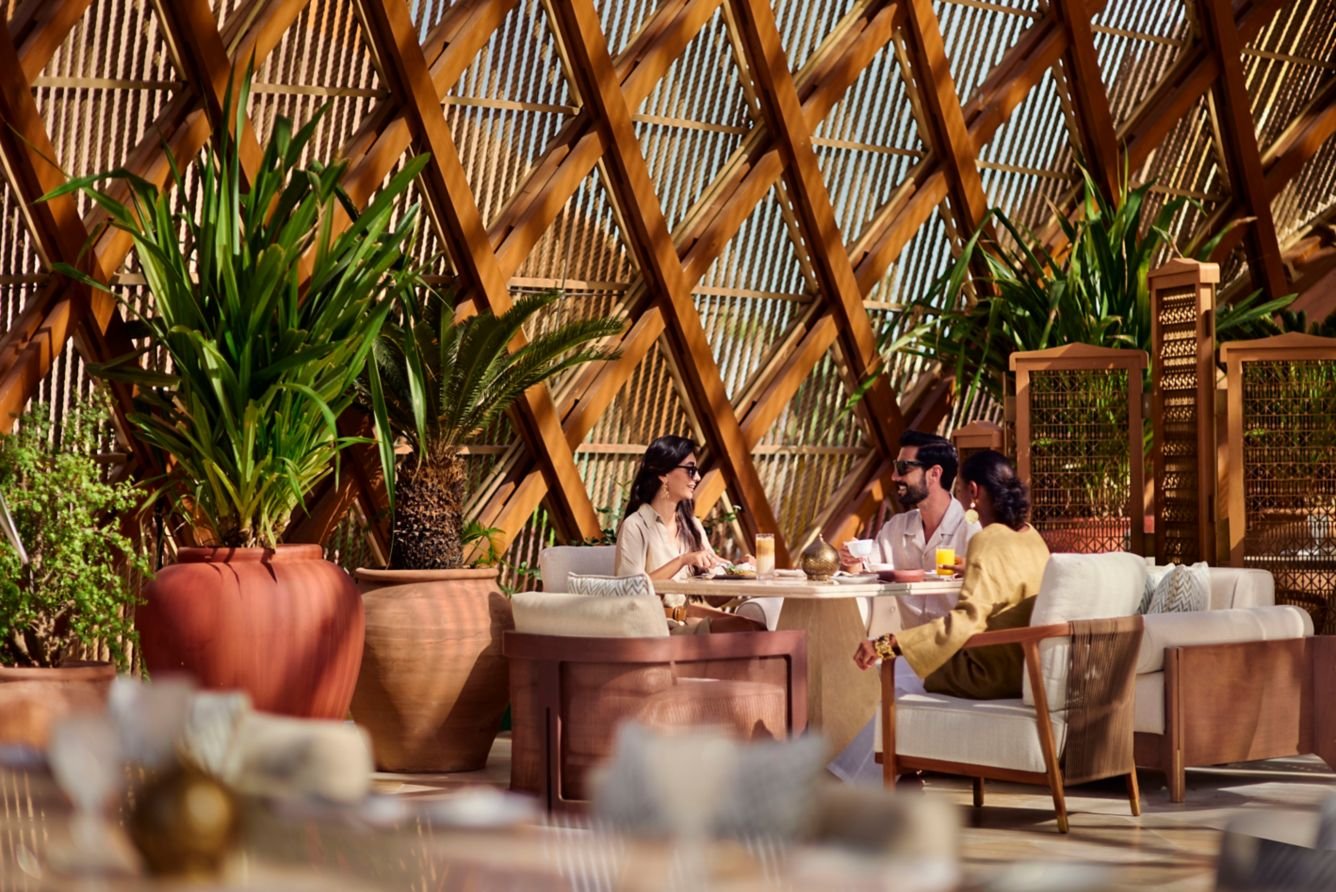
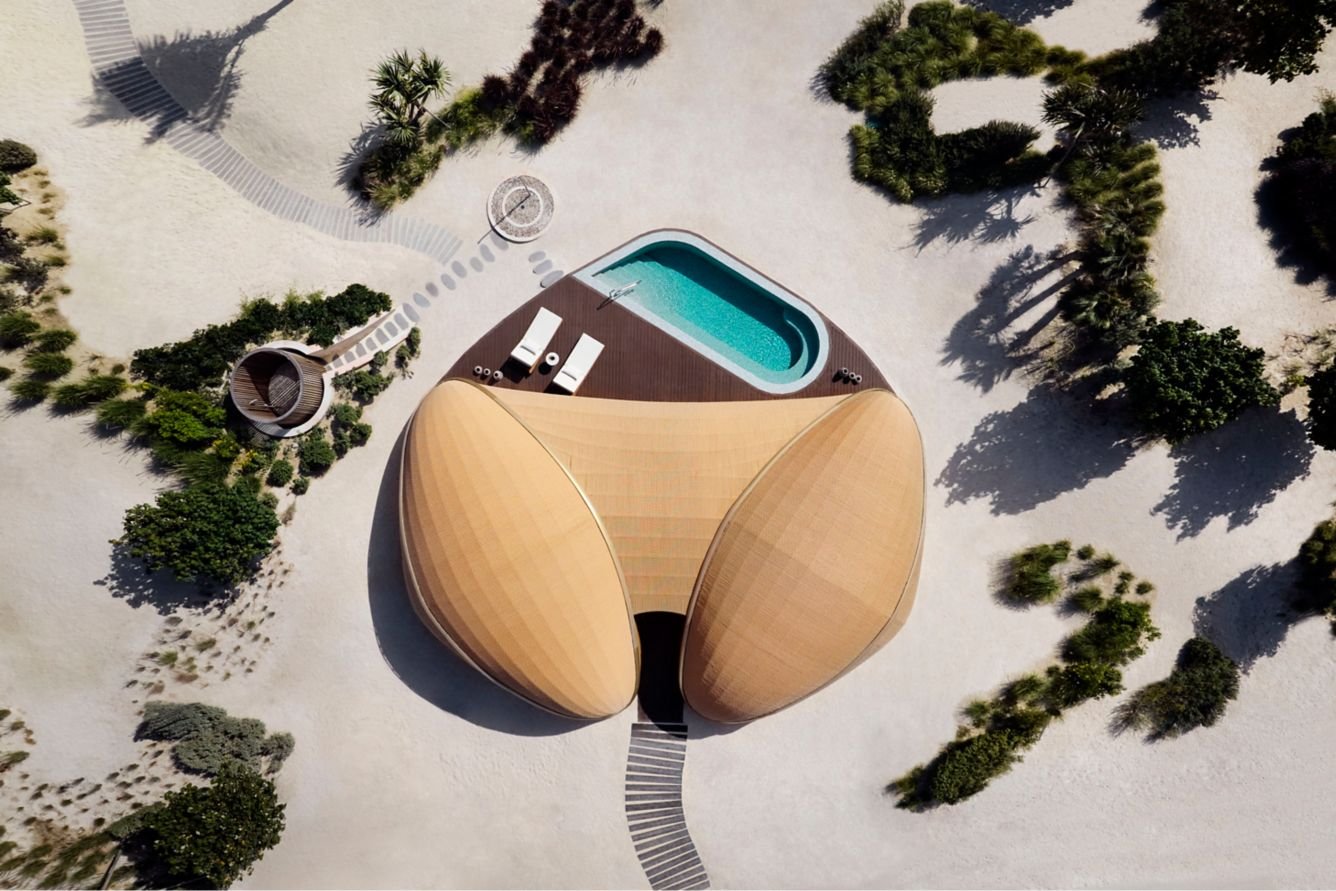
The St. Regis brings a familiar level of polish, but in a far more remote setting than usual. The resort has 90 villas split between overwater Coral Villas and beachfront Dune Villas, all with generous outdoor space and private pools.
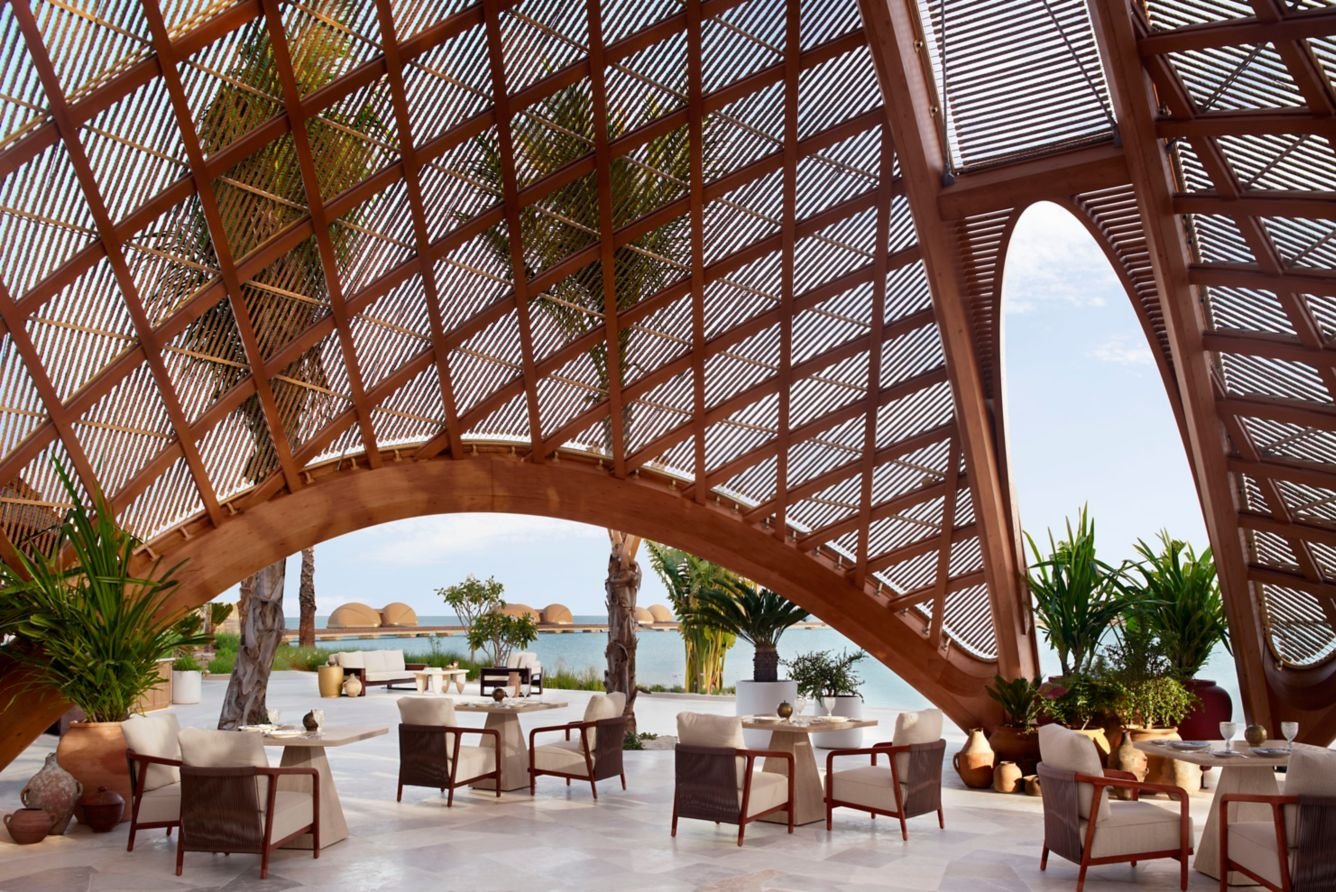
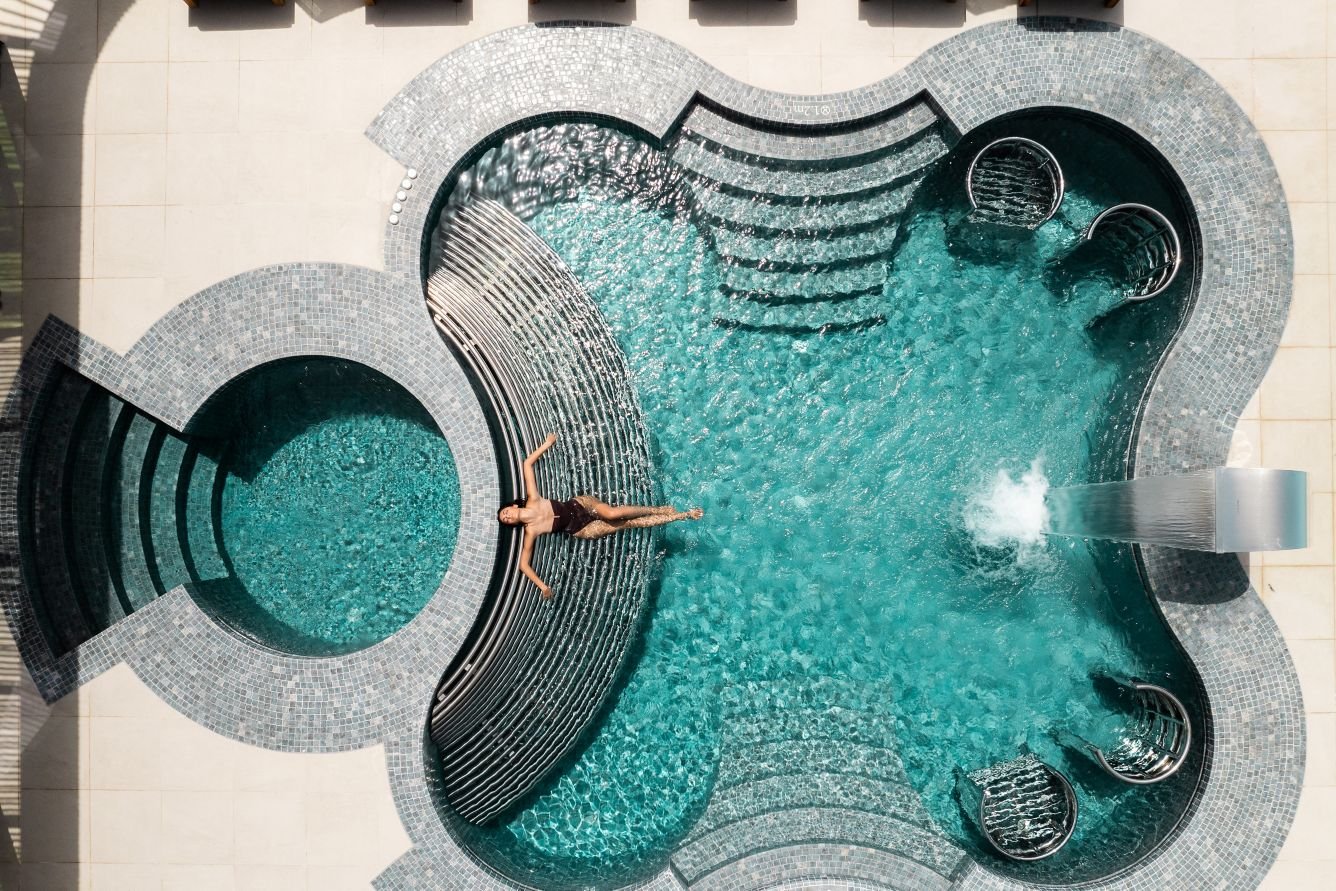
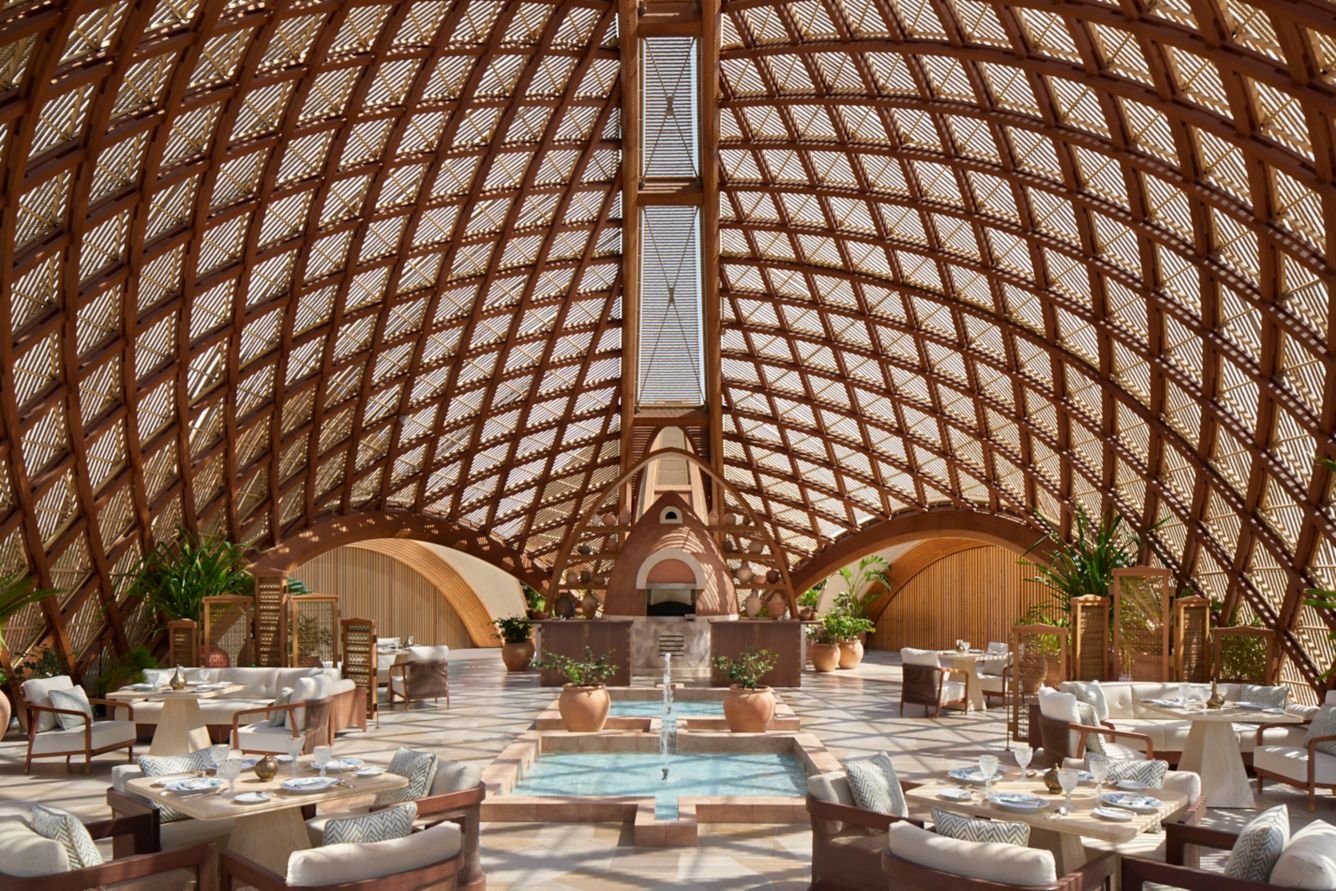
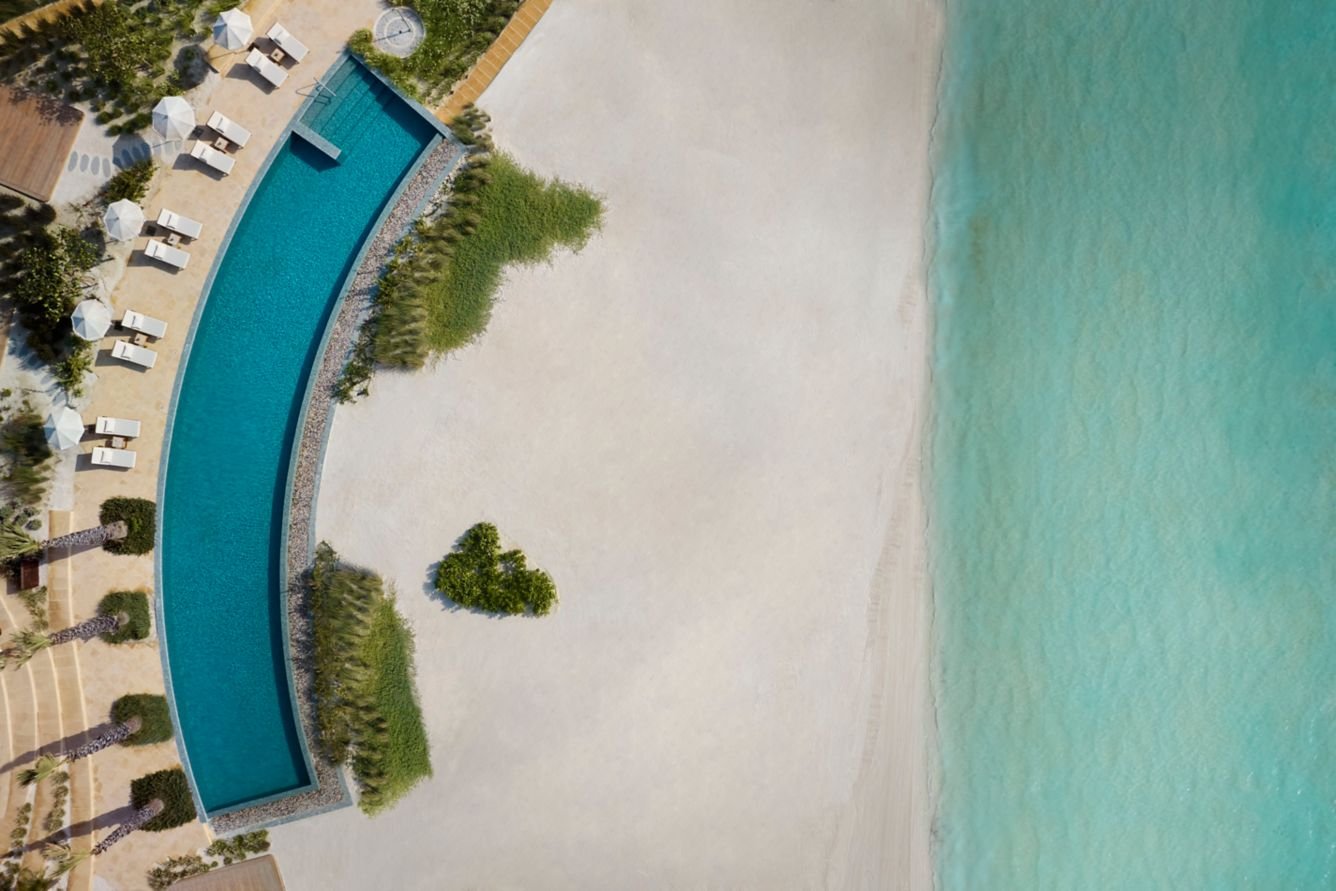
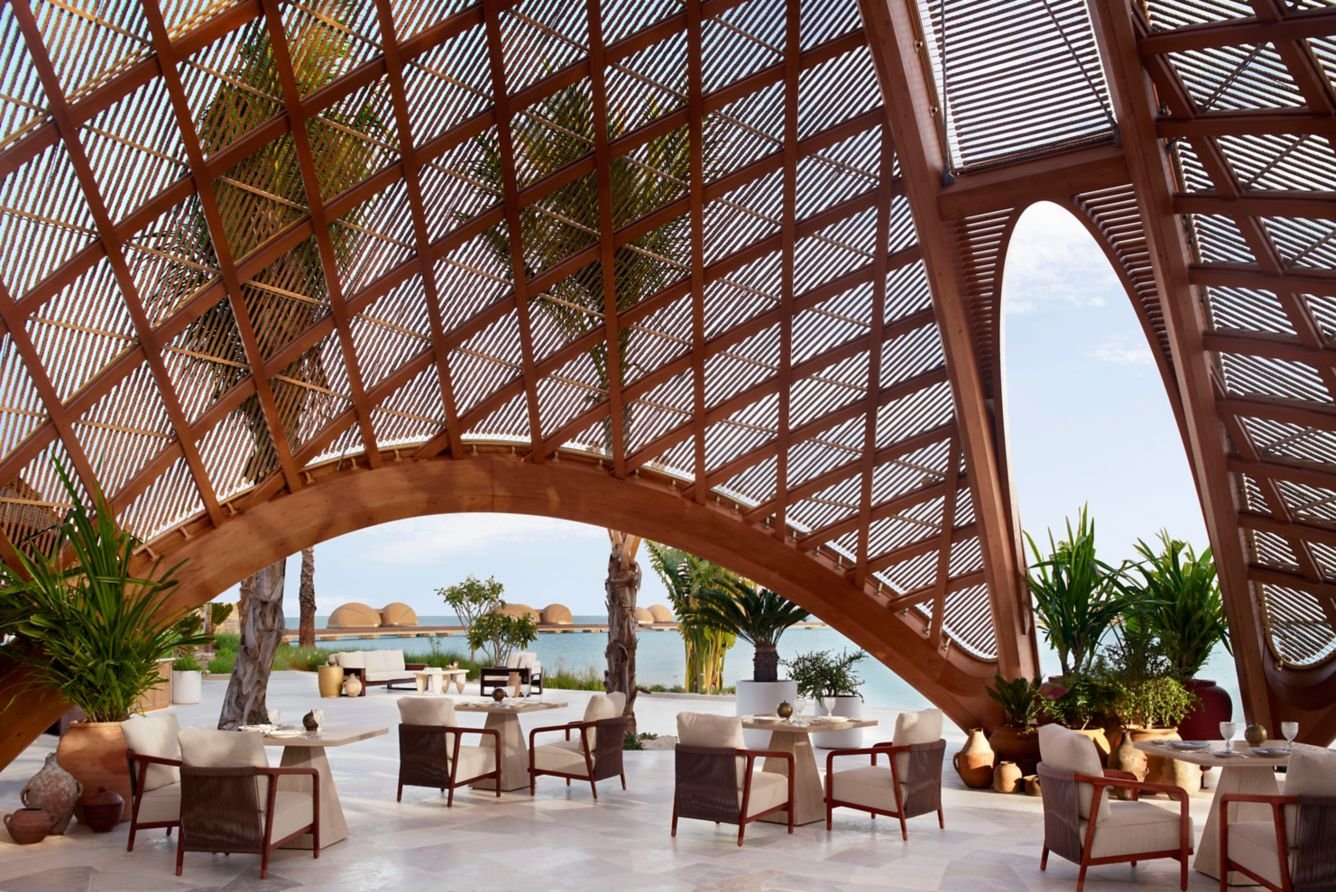
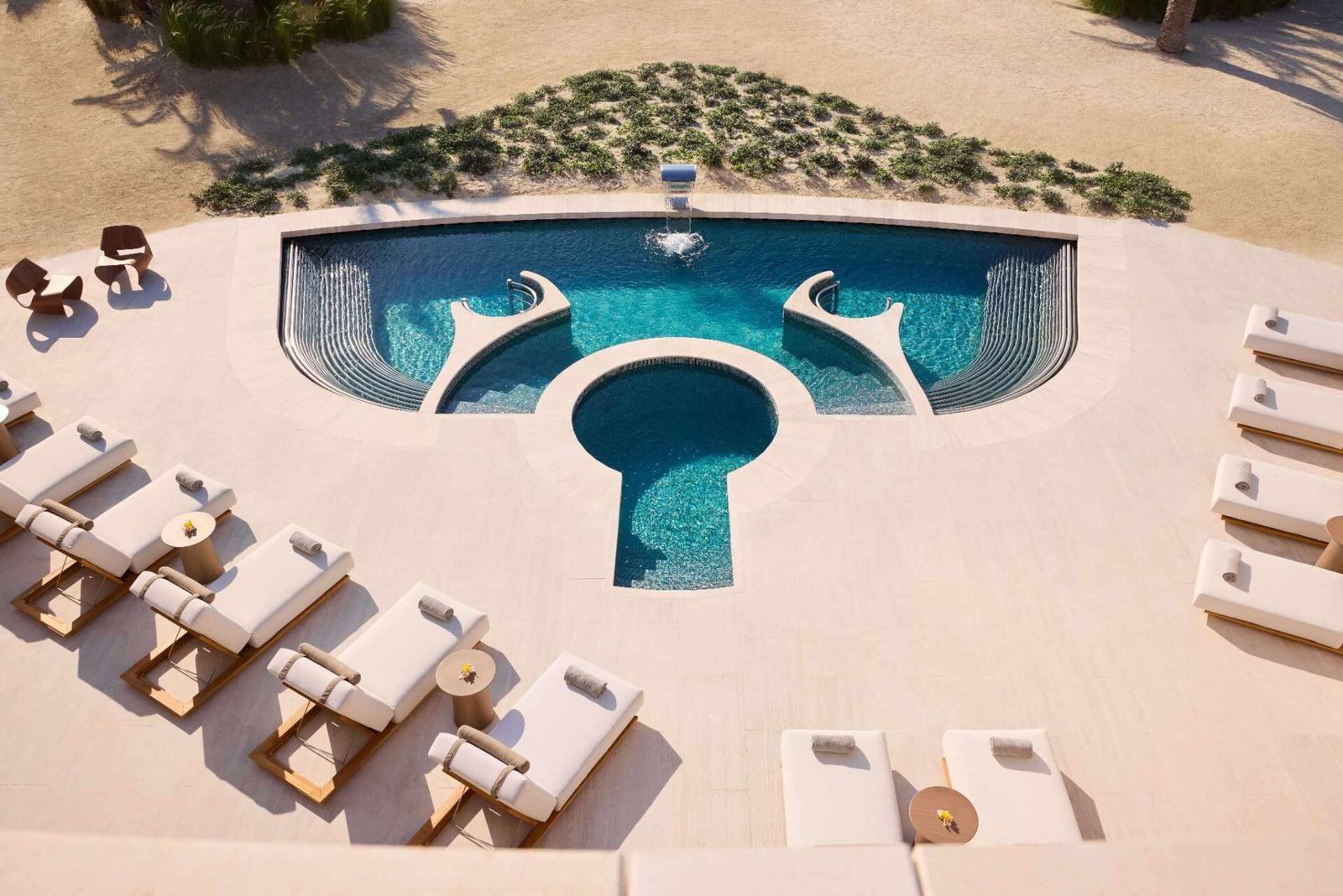
Design here is understated, natural wood, soft fabrics, muted colors, clearly meant to complement the landscape rather than compete with it. There’s a central pool, a spa, and a well-equipped water sports center, but the resort never feels busy.
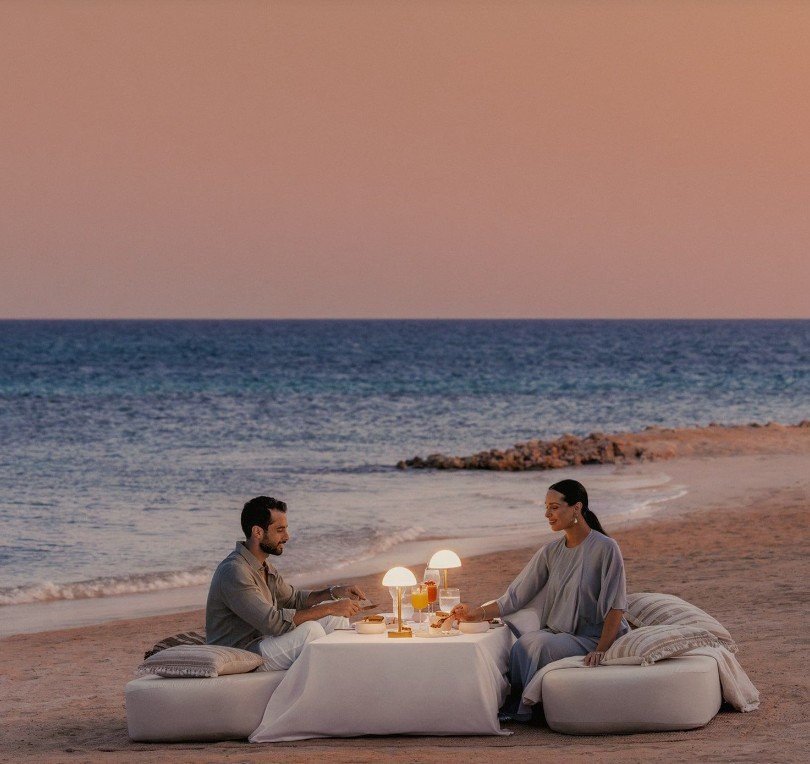
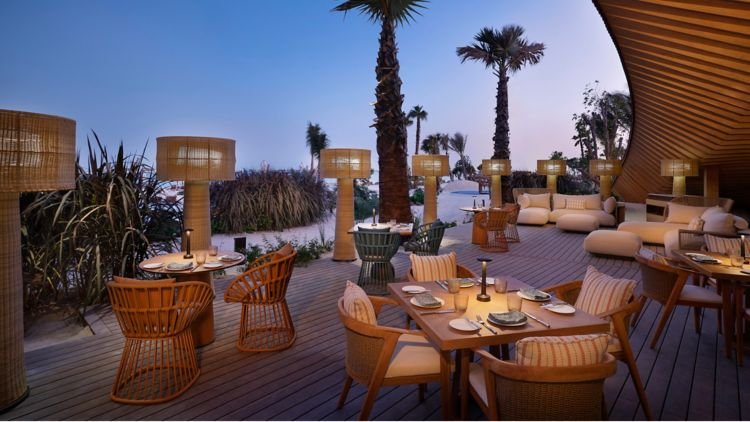
Food is one of its strengths. Nesma focuses on regional comfort dishes like manakish, while Tilina offers a more formal tasting-menu experience. Gishiki 45, serving Japanese-Filipino omakase, is the standout. Service is smooth and professional without feeling stiff, with butlers available around the clock. Designed by Kengo Kuma and powered by renewable energy, the resort feels like a careful, confident first step for the brand in Saudi Arabia.
The St. Regis Butler Service ensures every whim is catered to, providing a sense of pampering that is hard to beat.
Nujuma, a Ritz-Carlton Reserve
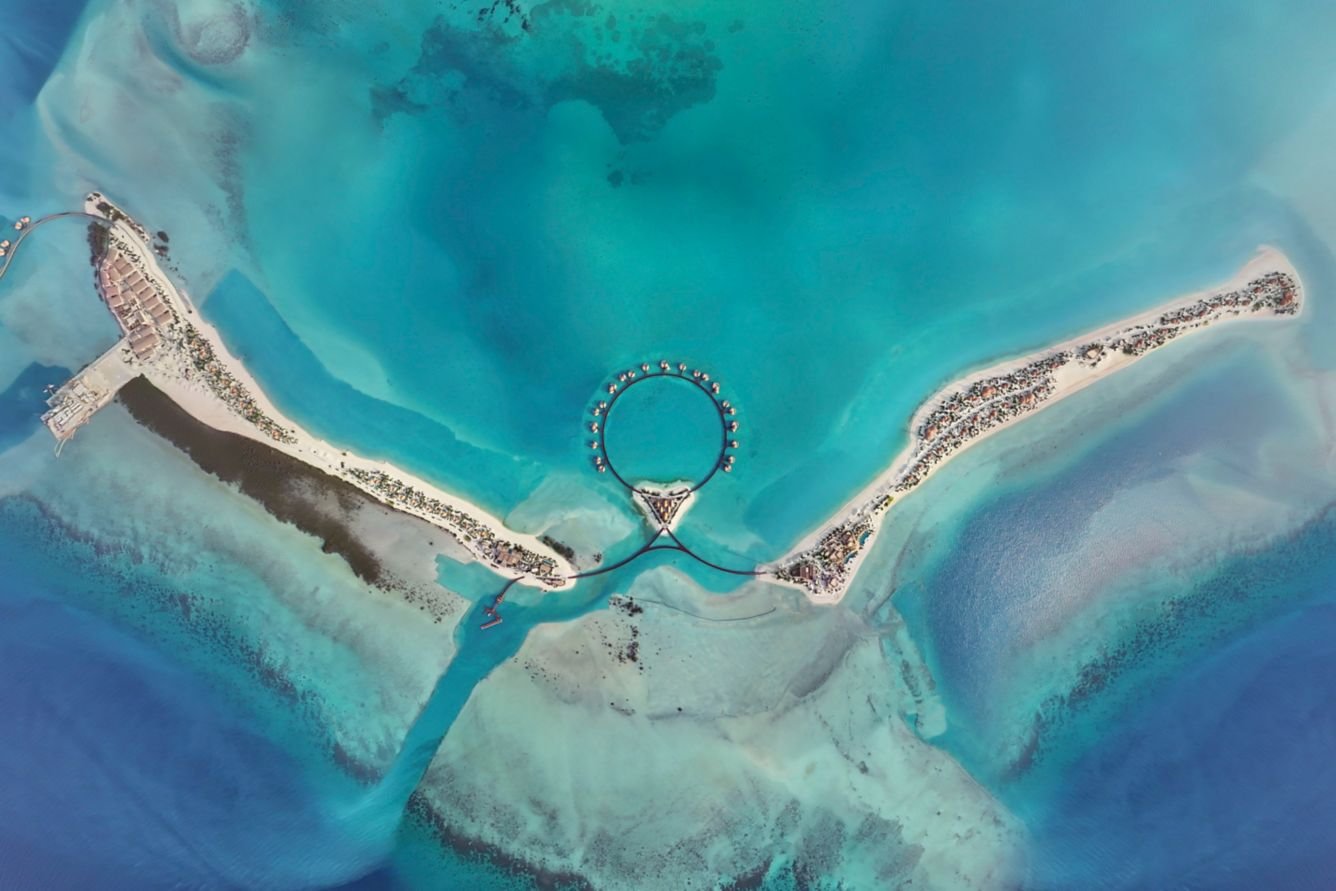
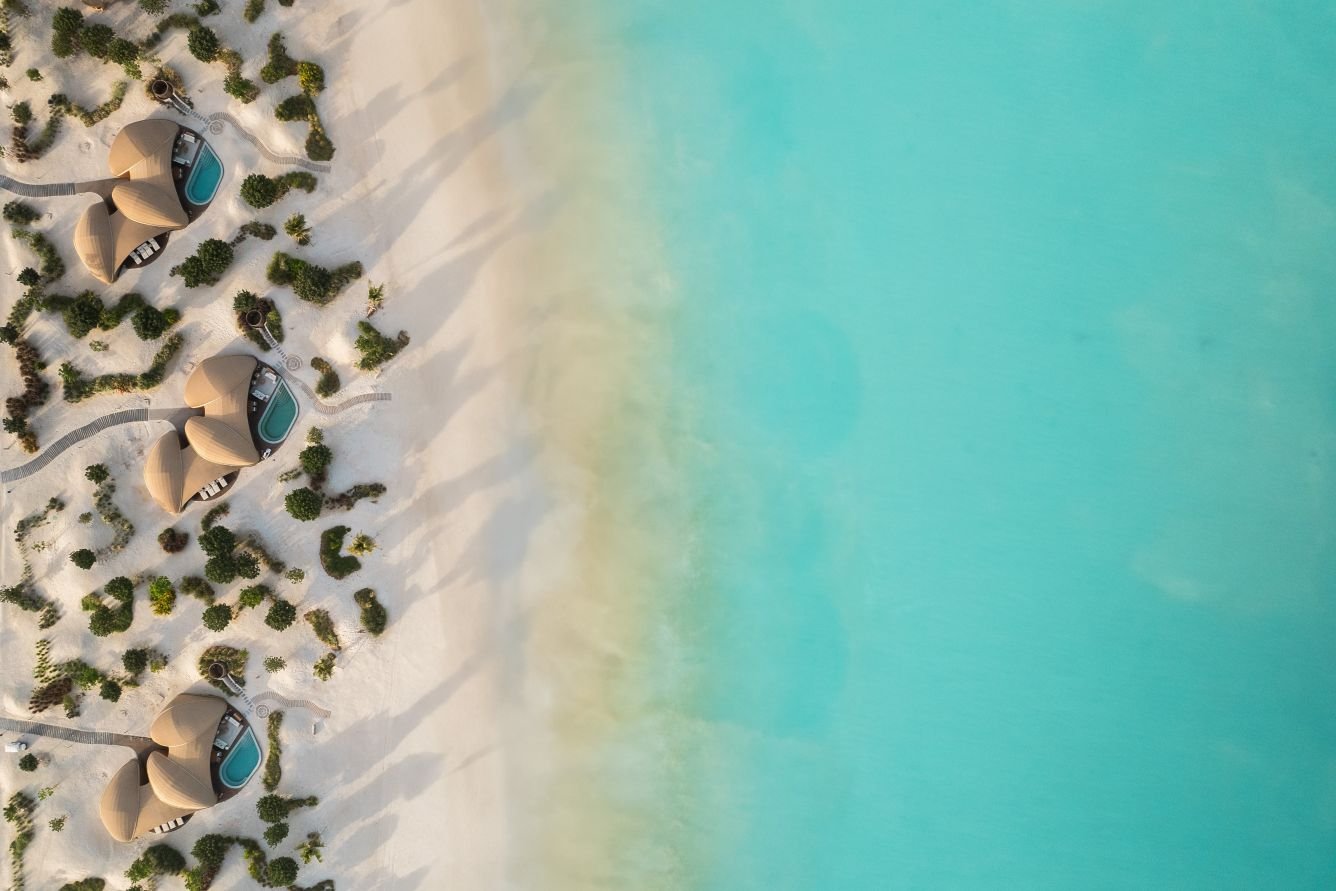
Set on the Ummahat Islands, Nujuma is the Ritz-Carlton Reserve’s first Middle Eastern property and one of the most refined resorts in the region. There are 63 villas in total, some over the water and others along the beach, all with private pools and sweeping views.
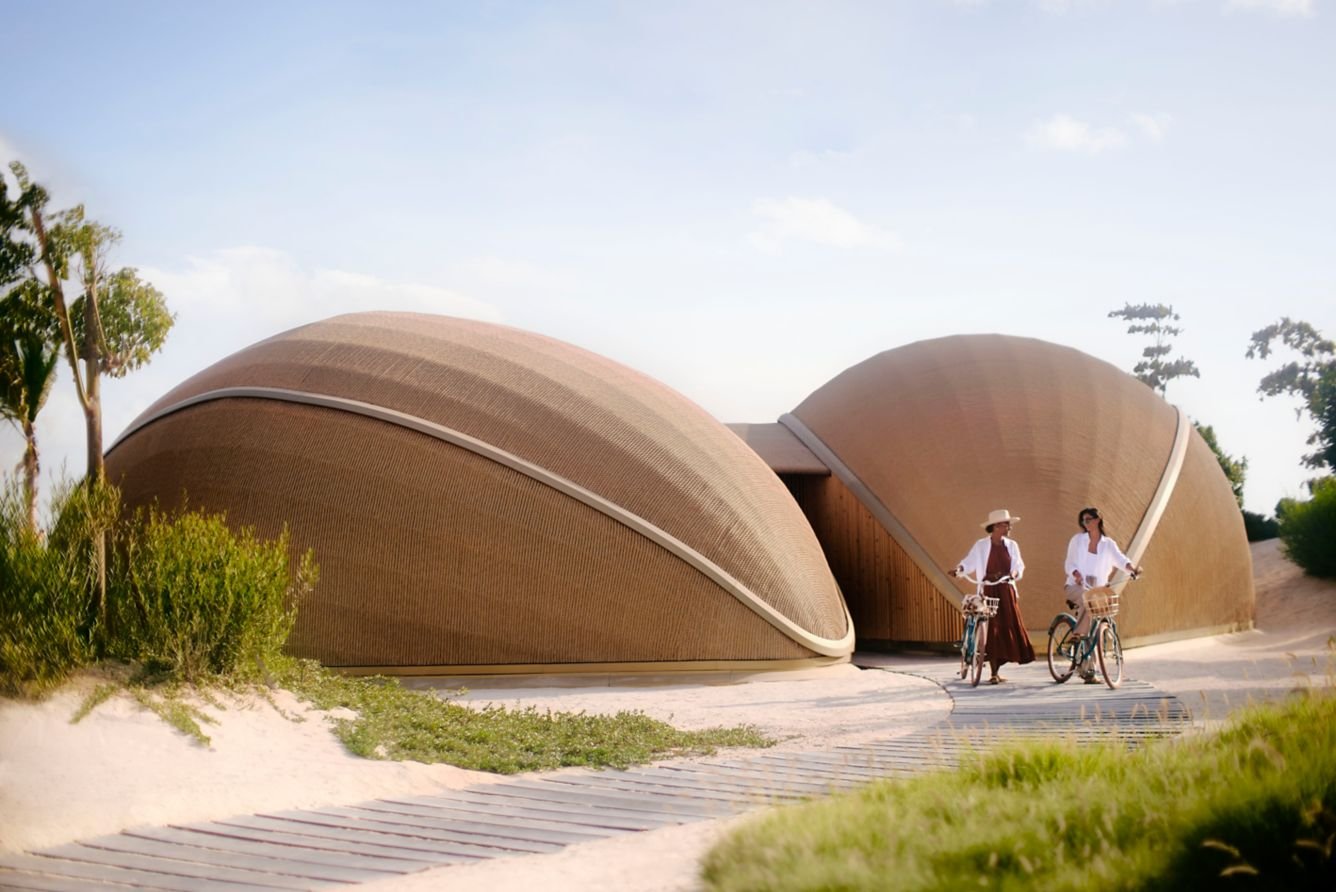
Foster + Partners designed the villas with soft curves and locally influenced details, giving them a futuristic feel that still works with the landscape. Dining is overseen by chef Lucas Julien-Vauzelle and leans toward French technique paired with regional ingredients. Expect dishes like Red Sea tuna alongside excellent Arabic breads.
Activities focus on the natural environment—diving with marine specialists, cycling along elevated paths, or spending time in the Conservation House, which highlights Saudi culture through art and design. Evenings are quiet: stargazing sessions, alcohol-free cocktails, and little else competing for attention. The resort runs on solar energy and places real emphasis on conservation without making it feel performative.
Essentials you need to know.
Arriving into Saudi Arabia (Jeddah and new Red Sea islands) where emerging luxury scene with pristine reefs and high‑end projects aimed at Maldives‑style stays.
How to get there
Red Sea International Airport (RSI) opened for domestic flights in 2023, with flights from Riyadh and Jeddah.
In April 2024, RSI started operating international services, with a twice weekly flight from Dubai. More overseas destinations are set to be announced.
Once you are there, seamless connections to properties along the Red Sea.
Visas & Immigration
Follow this link to find out more about visa requirements
Best time to visit
Overall sweet spot: March–May and September–November bring warm water, pleasant air temperatures, and fewer extremes.
What to pack (quick checklist)
Clothing: light breathable layers, 2–3 swimsuits, resort‑casual outfit for dinners, and a light sweater or windbreaker for evenings and boat rides.
Sun + sea gear: reef‑safe SPF 50, hat, polarized sunglasses, UPF rash guard, mask/snorkel if you’re picky about fit, and a 10–20L dry bag for boat days.
Footwear: flip‑flops or sandals, comfortable closed shoes for desert or city walks, optional water shoes for rocky entries and ladders.
Culture & practicals: modest town wear (shoulders and knees covered), light scarf, basic meds (especially motion sickness and stomach remedies), travel insurance, and 220V adapters.
Travel lightly on the reef:
Opt for mineral reef‑safe sunscreen, avoid touching coral, and follow local briefings to keep this marine environment as untouched as you found it.
Final Thoughts
The Red Sea coast isn’t trying to compete with established resort destinations in terms of volume or spectacle. Its strength lies in space, restraint, and a sense of newness that hasn’t yet been polished away.
These resorts reflect a range of approaches, from architectural statements to near-invisible retreats, but they share a common advantage: a coastline that still feels largely untouched. For travelers seeking something genuinely different in luxury beach travel, this part of Saudi Arabia is no longer hypothetical. It’s already happening.
More exclusive properties available across the Red Sea. When you book with me you will get special perks & amenities.
Discover a hidden world of wonder.

Gustavo García Santa Cruz
Book author, travel curator & architect. With hotel management expertise and decades leading a boutique agency, I deliver high-touch, ultra-personalized travel experiences worldwide.